Best Surfing Camps for Digital Nomads: Remote Work Integration
The modern professional landscape has fundamentally changed through the rise of decentralized work. Individuals now seek environments that accommodate rigorous vocational output alongside intense athletic pursuits. This trend has catalyzed a specialized sector within the tourism industry. Traditional surf camps were historically designed for short-term vacationers with minimal professional demands. Now, institutions must bridge the gap between high-performance ocean training and reliable office infrastructure.
Achieving this balance requires more than just high-speed internet access. Operators must build complex ecosystems that harmonize tidal patterns with conference call schedules. A professional nomad requires stable power, ergonomic workspaces, and community environments that facilitate networking. Meanwhile, the ocean component demands precision in swell forecasting to ensure that surfing sessions do not conflict with peak productivity hours. The intersection of these two distinct worlds forms the foundation of contemporary remote athletic retreats.
Navigating the market for these integrated experiences demands a critical eye. Many programs label themselves as nomad-friendly while lacking the actual infrastructure to support sustained work. True high-performance retreats operate as hybrid institutions. They treat the work-life balance as a technical problem to be solved with logistics, rather than a marketing concept to be sold. Understanding these operational requirements is essential for any professional seeking to integrate coastal immersion with their ongoing career responsibilities.
Understanding “best surfing camps for digital nomads”
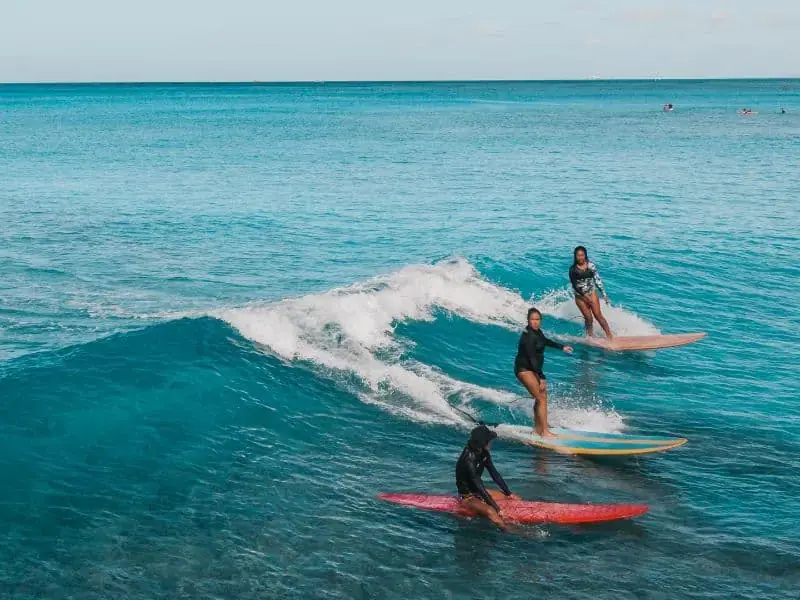
The classification of the best surfing camps for digital nomads identifies institutions that serve as dual-purpose hubs. These environments are engineered for professionals who need to maintain full-time output while engaging in technical surf progression. They move away from the “party” atmosphere of traditional camps, favoring settings that emphasize routine, structure, and reliability. The goal is to maximize waves ridden without compromising professional project delivery.
Technical Misunderstandings in Nomad Hospitality
A common error is assuming that any property with a desk and a router qualifies as a specialized nomad camp. This view ignores the extreme difficulty of maintaining professional-grade connectivity in coastal, often humid, or remote zones. True institutional providers manage dedicated redundant satellite links and backup power arrays. They understand that a professional’s requirement for a video call cannot be sidelined by a change in tide or weather.
Balancing Ocean Dynamics and Office Hours
Successfully managing these camps requires solving a persistent conflict between nature and work. Surfing is governed by tides, swells, and wind—variables that rarely align with a standard nine-to-five workday. The best programs implement a “flexible-clock” framework. This allows professionals to leverage optimal early-morning or evening swell conditions while reserving mid-day periods for heavy-focus task execution.
The Infrastructure of Professional-Grade Training
Beyond internet speed, these institutions offer specific athletic supports. They provide video analysis during non-work hours and offer coaching that respects the physical fatigue associated with long hours at a desk. Managing the physical body to prevent injury is a central pillar of their operational philosophy. They prioritize longevity over short-term intensity, recognizing that a professional needs to remain functional for their career while progressing in the water.
Historical Evolution of Remote Work and Surf Integration
Historically, the surfing world remained physically tethered to static locations. Professionals who surfed were forced to reside in coastal cities with high costs of living and intense lineup competition. This created a rigid separation between professional success and athletic fulfillment. The surf camp model of the late twentieth century was entirely focused on the “escapist” vacation, designed for people who were temporarily unplugged from the world.
The Rise of Distributed Infrastructure
The transition began as portable computing improved and coastal regions installed better communication lines. This enabled a demographic of software engineers, digital designers, and consultants to move their operations to the coast. Initially, these early adopters lived in isolation, struggling to find reliable workspaces near accessible waves. This created a market vacuum that was eventually filled by the emergence of professional-grade surf retreats.
Modern Institutional Standardization
Today, the sector defined by the best surfing camps for digital nomads is characterized by institutional maturity. We see purpose-built centers emerging in places that were previously inaccessible for professional work. These locations are vetted for internet stability, regional power reliability, and local healthcare access. The professionalization of this sector has turned surf retreats from casual vacation spots into viable, long-term options for sustainable remote living.
Conceptual Frameworks for Dual-Path Productivity
Professionals must adopt specific mental models to manage the tension between deep-focus work and the chaotic environment of the ocean. These frameworks help in organizing time and energy to ensure both fields of endeavor remain productive.
The Swell-Synchronized Task Matrix
This model requires the professional to treat their work as a fixed asset and their surfing as a variable asset. They map their most intensive work tasks against the forecast of local tide movements.
-
Swell Forecast Mapping: Using meteorology to predict when the waves will be at their peak quality for the week.
-
Work Load Allocation: Scheduling high-cognitive tasks, such as coding or strategy, during periods when the surf is inconsistent or flat.
-
Recovery Buffer Zone: Integrating intentional physical downtime to ensure that surfing does not impair the mental clarity required for work.
The Cognitive-Physical Energy Pivot
Surfing is physically demanding, especially for individuals used to static desk work. This framework teaches the professional to monitor their “physical bank account.” It emphasizes the importance of nutrition, sleep, and mobility exercises to bridge the gap between sedentary desk hours and high-intensity aquatic movement. Preventing burnout in either domain is the primary success metric.
The Adaptive Workspace Framework
Professionals in these environments often need to move between different types of spaces. This model categorizes work into “Deep Focus,” “Collaboration,” and “Passive Maintenance.”
Categorizing Integrated Nomad Surf Operations
The global market for these camps is highly varied, offering different types of environments based on regional stability, cultural accessibility, and wave consistency. Choosing the right one requires aligning your personal professional needs with the local coastal reality.
Fully Managed Institutional Hubs
These operations provide a complete ecosystem. They handle everything from airport transfers and high-speed Wi-Fi to professional surf coaching and communal dining. These hubs are designed to minimize “friction cost”—the time and mental energy wasted on daily survival logistics. They are ideal for professionals starting their journey or those facing tight project deadlines.
Independent Co-Living Networks
This category focuses on housing independent professionals who share costs for high-speed connectivity and collective workspace maintenance. They offer more freedom than institutional hubs but require more active participation from the residents. This structure is excellent for long-term nomads who want to establish a more permanent community presence in a specific surf region.
Remote-Access Wilderness Outposts
These retreats are located in rugged, underdeveloped regions where the primary draw is uncrowded waves. They often rely on satellite internet and off-grid power, making them better suited for those who can tolerate occasional connectivity issues. These locations offer the highest potential for deep focus and personal transformation but carry higher operational risk.
Selecting the Right Institutional Path
When evaluating programs, apply a “Three-Factor Filter”: connectivity redundancy, community maturity, and athletic compatibility. First, verify the internet bandwidth through non-promotional sources. Second, assess the caliber of other professionals currently in the cohort to ensure networking quality. Third, confirm that the coaching staff has experience working with desk-bound individuals who may have tight hip muscles or specific physical limitations.
Operational Scenarios and Marine Conflict Resolution
Living and working in a remote surf camp involves constant negotiation with the environment. Successful integration requires anticipating how work and waves will intersect.
Scenario A: The Emergency Client Call During a Clean Swell
A professional has a critical client meeting scheduled during a long-period, high-quality swell.
-
The Challenge: Attending the call means missing the best wave session of the week.
-
The Decision: The professional delegates minor updates to their team, joins the call from an enclosed office pod, and catches the evening secondary swell instead.
-
The Outcome: The project remains on track, and the physical training continues with minimal loss of wave quality.
Scenario B: Adapting to Connectivity Failure
A powerful storm cuts the main fiber-optic link to a coastal retreat.
-
The Challenge: The team is unable to push code or access critical cloud servers.
-
The Decision: The camp activates their redundant satellite mesh network. Work shifts to low-bandwidth tasks, such as local document editing or planning, until the primary line is restored.
-
The Outcome: The team avoids total productivity collapse by having a tiered connectivity plan.
Financial Dynamics and Resource Allocation Metrics
Professionals must account for both the direct costs of the camp and the indirect costs of maintaining their home infrastructure. Many forget the “opportunity cost” of lost productivity if they select a sub-par environment.
Direct and Indirect Expense Architectures
Direct costs include facility fees, coaching, and lodging. Indirect costs represent the risk-adjusted value of potential downtime. A cheap camp that lacks stable internet is actually the most expensive option when it leads to a missed deadline.
Resource Allocation Benchmarks
A successful nomad budget prioritizes the “Work-Stability Index” over the “Luxury Index.” A retreat with basic furniture but redundant 500 Mbps internet is always more valuable to a digital professional than a luxury resort with unreliable, shared guest Wi-Fi.
Field Tools and Support Infrastructure
High-performance nomad retreats utilize a specific set of tools to ensure both work and training are supported. These tools turn an uncertain remote environment into a controlled workspace.
Redundant Communication Arrays
The most valuable asset in any remote camp is an independent communication stack. This includes dual-provider internet, such as a localized fiber line combined with a low-earth-orbit satellite backup. This ensures that a local cable break does not result in a professional crisis.
Physical Conditioning Tools
Desk work leads to specific postural imbalances, particularly in the shoulders and hips. The best camps provide access to yoga, mobility sessions, or dedicated physical therapy to undo the damage of an eight-hour workday before the student enters the water.
Workspace Standardization
-
Ergonomics: Adjustable standing desks, high-end chairs, and secondary monitors.
-
Acoustics: Sound-dampening materials in workspaces to ensure high-quality audio for calls.
-
Climate Control: Consistent temperature regulation to protect hardware and ensure comfort during long sessions.
Risk Landscapes and Failure Modes
The “digital nomad” lifestyle is not without significant risk. Remote operations are vulnerable to compounding failure points, where one small disruption cascades into a total shutdown.
Taxonomy of Productivity Failures
-
Infrastructure Collapse: Simultaneous failure of power and network.
-
Environmental Obstruction: Severe weather that makes waves unrideable and connectivity unreliable.
-
Social Burnout: Lack of defined structure leading to a decline in professional output or physical exhaustion.
-
Isolation Stress: The psychological burden of operating without a local community or stable social support.
The Failure Mitigation Matrix
Operations that survive long-term are those that anticipate these failures. They have “degraded operation modes”—plans for how to function when the internet is slow or when the waves are flat—which prevent one disruption from ruining the entire experience.
Governance, Maintenance, and Long-Term Adaptation
A camp is not a static facility; it must evolve with the needs of its residents. Long-term authority is maintained by monitoring key performance metrics and responding to shifts in remote work culture.
Monitoring and Review Cycles
Camp management should conduct monthly reviews of technical and athletic feedback. This includes checking network latency logs and surveying guests about the quality of the surfing instruction. These data points identify potential weaknesses before they become systemic problems.
Layered Maintenance Checklist
-
Connectivity Audit: Quarterly stress-testing of all network lines and power backups.
-
Equipment Lifecycle: Replacing high-wear surf gear and ergonomic office equipment on a strict schedule.
-
Regulatory Monitoring: Regular checks on local zoning and coastal access laws to ensure the retreat is operating within legal bounds.
Measurement, Tracking, and Evaluation
Professional success in these environments is measured by the ability to maintain output while improving. Successful nomads use documentation to hold themselves accountable.
Leading vs. Lagging Indicators
-
Leading Indicators: Amount of time spent in mobility drills, weekly network uptime percentage, and consistent daily deep-work hours.
-
Lagging Indicators: Number of successful project milestones completed, total waves caught, and physical soreness/injury metrics.
Documentation Examples
Professionals keep a “Dual-Log”—a shared document that tracks both professional accomplishments and athletic technical corrections. This dual-focus prevents the decay of either capacity.
Common Misconceptions and Oversimplifications
The popularity of the digital nomad lifestyle has created myths that often mask the difficulty of actually integrating these two worlds. Addressing these myths is necessary for any newcomer to the lifestyle.
Myth 1: Coastal Life Is Always Productive
Many assume that the beauty of the coast naturally enhances work output. The reality is that the ocean is a massive distraction. Without rigid self-discipline and camp structure, work output often degrades significantly.
Myth 2: Shared Wi-Fi Is Sufficient
Professional output requires exclusive bandwidth. A camp that suggests “we have Wi-Fi” without providing hard-wired, multi-line redundancy is inherently unreliable for high-level remote work.
Myth 3: Surfing Is a Reliable Daily Habit
Waves are unpredictable. The “best surfing camps for digital nomads” do not promise daily perfect waves; they promise a robust support system for when waves are good, and a productive environment for when they are not.
Ethical and Contextual Considerations
Integrated surf retreats exist within local communities. They have a responsibility to act as good neighbors and environmental stewards. This involves providing jobs for locals, protecting the coastal environment from excess waste, and ensuring that the presence of nomadic professionals does not displace the local economy.
Community-Led Stewardship
The most sustainable camps are those that actively partner with local NGOs for ocean cleanup and coastal preservation. This integration ensures that the presence of the retreat provides long-term value to the local region, rather than acting as an extractive force.
Conclusion
The pursuit of a lifestyle that integrates professional output with ocean immersion is inherently demanding. Success depends on the quality of the institution chosen and the discipline of the professional involved. The best programs are those that treat workspace connectivity and surf biomechanics as equally critical pillars of the experience. By prioritizing infrastructure stability and structured athletic progression, professionals can maintain both their careers and their physical health in high-quality, coastal environments. The integration of these two paths is not merely a lifestyle trend; it is a sophisticated operational challenge that, when solved, offers a unique opportunity for sustainable, high-performance living.