How to Manage Unpredictable Waves During Surfing Camps: A Masterclass in Surf Oceanography and Camp Management
Managing a surfing camp requires balancing structured education with the chaotic nature of the ocean. While traditional athletic training occurs in controlled environments, surf coaching relies entirely on a fluid, shifting medium. The primary operational bottleneck for any surf camp is wave variability. Changes in the marine environment can rapidly disrupt planned lesson schedules. When swell patterns shift unexpectedly, directors must pivot from standard operations to advanced risk mitigation.
Surf camps often cater to diverse skill levels simultaneously. A single incoming swell might provide ideal conditions for advanced surfers while presenting severe hazards for beginners. This variance requires an analytical approach to logistics, coaching ratios, and location selection. Directors cannot rely on hope or static schedules. Instead, they must implement dynamic operational frameworks that prioritize student safety while maximizing instructional value.
Successfully navigating these shifts requires deep technical knowledge. Staff must understand bathymetry, localized weather systems, and hydrodynamics. When conditions change, the camp’s leadership must assess the physical risks and psychological impacts on participants. Fear management and cognitive fatigue are just as critical as physical safety when waves become volatile.
This article outlines the structural, analytical, and operational strategies required to maintain camp continuity amid volatile ocean conditions. By analyzing the intersection of coastal science, group dynamics, and risk management, operators can establish resilient systems. These protocols preserve the integrity of the educational experience, ensuring high-level instruction regardless of what the ocean delivers.
Understanding “how to manage unpredictable waves during surfing camps”
The Multi-Perspective Nature of Surf Management
To understand how to manage unpredictable waves during surfing camps, operators must view the ocean through multiple lenses simultaneously. From an oceanographic perspective, unpredictability is not random chaos; it is the intersection of complex physical vectors. Sells generated thousands of miles away interact with local winds, tidal heights, and changing sandbars.
From an educational perspective, variability alters the learning curve. A wave that closes out too quickly eliminates the opportunity for a student to practice cross-stepping or turning. From a logistical perspective, changing conditions dictate fuel consumption, vehicle deployment, and instructor scheduling.
Common Misunderstandings in the Industry
A frequent misunderstanding in the surf camp industry is the belief that local knowledge outweighs real-time data analysis. Experienced surfers often rely on intuition developed over years of riding a specific break. While intuition is valuable, it frequently fails during extreme anomaly events, such as unseasonal storm swells or rapid bathymetric shifts caused by major floods.
Another common error is treating wave height as the sole metric of difficulty. A two-foot wave breaking over a shallow, dry reef can be far more hazardous to a beginner than a five-foot, slow-rolling wave breaking over a deep sand channel.
The Risks of Oversimplification
Oversimplifying wave management leads directly to operational failure and physical injury. Directors often use broad labels like “beginner-friendly” or “advanced only” for specific surf breaks. These static designations ignore the reality that a beach break can transform from a safe playground into a hazardous arena within a single six-hour tidal cycle.
When operators fail to account for these rapid transitions, instructors are left exposed on the beach. They are forced to make high-stakes tactical decisions without structural support from camp leadership.
Deep Contextual Background
The Evolution of Surf Tourism
The global expansion of surf tourism over the past several decades has shifted the demographics of surf camp participants. Historically, surf trips were undertaken by highly experienced, independent surfers willing to accept substantial physical risks in exchange for uncrowded waves. Modern surf camps, however, attract corporate travelers, families, and absolute beginners who expect structured safety, predictable schedules, and rapid skill acquisition.
This demographic shift has changed the legal and operational responsibilities of camp operators. What was once classified as an inherent risk of an extreme sport is now viewed through the lens of professional liability and duty of care.
The Impact of Modern Forecasting
Concurrently, the science of marine forecasting has advanced significantly. The introduction of public satellite data, spectral wave models, and localized offshore buoy networks has transformed how operators prepare for surf sessions. Thirty years ago, camp guides relied on barometric pressure readings and visual scans from high vantage points. Today, directors can access high-resolution wind models and swell partition charts days in advance.
However, access to data has created a false sense of security. While global models excel at predicting the arrival of long-period swells, they frequently struggle with localized coastal dynamics. Micro-climates, sea-breeze fronts, and rapid sandbar migration can render a digital forecast inaccurate. The modern challenge is not a lack of information, but rather the cross-referencing of macro-forecasts with real-time coastal observations.
Conceptual Frameworks and Mental Models
The Dynamic Hazard Zone Model
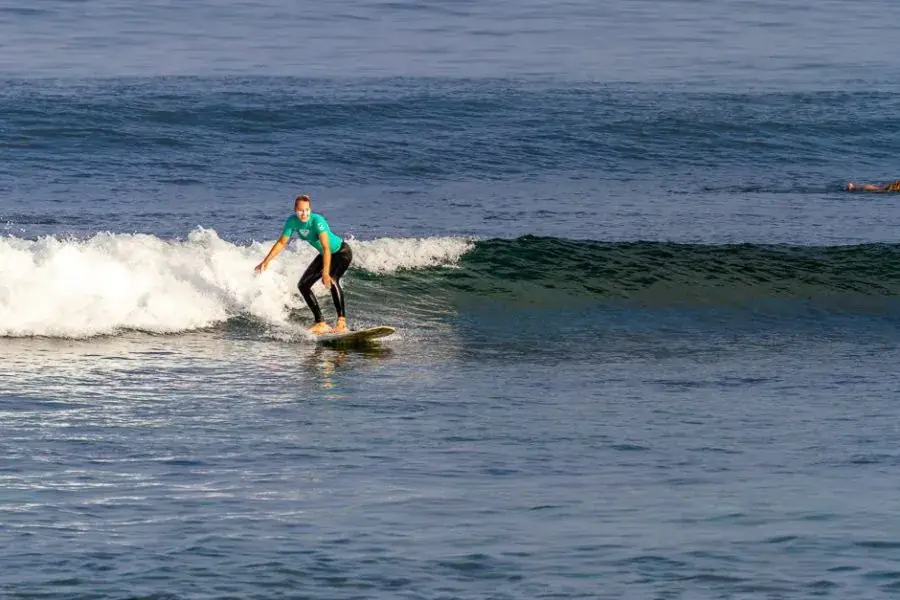
To systematically assess risk when teaching surf camps, operators can utilize the Dynamic Hazard Zone (DHZ) model. This framework divides any given surf break into three distinct, shifting zones based on real-time hydrodynamics.
The boundaries of these zones change continuously with the tide. A channel that provides safe passage at high tide may become part of the impact zone at low tide. Instructors must constantly map these zones to keep students positioned safely relative to their physical capabilities.
The Swiss Cheese Model of Maritime Safety
Adopted from aviation and industrial safety, this model posits that accidents occur when multiple independent failures align simultaneously. In a surf camp context, the “slices of cheese” represent defensive barriers:
-
Barrier 1: The morning forecast analysis by the director.
-
Barrier 2: The physical assessment of the break by the lead instructor.
-
Barrier 3: The adherence to strict student-to-coach ratios.
-
4. Physical Condition: The pre-session physical screening of the participants.
An injury rarely happens due to a single large wave. Instead, it occurs when a inaccurate forecast leads to choosing an inappropriate break, compounded by an instructor who is managing too many students, occurring right as a student experiences fatigue. Recognizing how these vulnerabilities compound allows directors to halt operations before a crisis occurs.
The Cognitive Load Threshold in Aquatic Learning
Surfing requires intense information processing. Students must simultaneously monitor paddling technique, board trim, oncoming waves, and nearby surfers. When wave conditions become unpredictable, the cognitive load increases exponentially.
According to this framework, when a student’s cognitive threshold is exceeded, performance drops and panic rises. Instructors must adjust their teaching style when waves are unruly. They should reduce technical feedback and focus entirely on simple safety commands like “cover your head” or “paddle outside.”
Key Categories and Variations of Wave Unpredictability
Wave unpredictability manifests in several distinct ways, each presenting unique challenges for camp operations. Understanding these specific variations allows directors to tailor their response strategies effectively.
Short-Period Windswell Inundation
Windswells occur when local winds blow continuously over a short distance. This creates waves with short intervals, typically between 4 and 7 seconds. The resulting surf is chaotic, with multiple wave peaks overlapping and breaking simultaneously.
-
Operational Challenge: There is no clean “channel” for paddling out, forcing students to endure constant whitewater impact.
-
Coaching Strategy: Focus sessions on whitewater management and pop-up mechanics close to shore, rather than attempting to reach the outside lineup.
Long-Period Groundswell Transitions
Groundswells are generated by distant storms and feature long intervals between waves, often 14 to 22 seconds. While these swells create clean, powerful waves, they also introduce significant unpredictability for camps. Long-period swells often arrive in large “sets” separated by long periods of flat water.
-
Operational Challenge: A break can appear perfectly calm for fifteen minutes, lulling beginners into a false sense of safety, before a massive set of waves breaks across the entire area.
-
Coaching Strategy: Implement mandatory ten-minute observation periods from the beach before entering the water to accurately count set frequencies and maximum wave sizes.
Rapid Tidal Range Shifts
In regions with large tidal ranges, such as parts of Western Europe or Central America, water depth can change by more than twelve feet in six hours. This rapid movement of water completely alters how waves break over the underlying bathymetry.
-
Operational Challenge: A soft, rolling wave suitable for beginners can transform into a dangerous, hollow shore-break within ninety minutes as the tide drops.
-
Coaching Strategy: Schedule structured lesson blocks that do not exceed two hours, specifically timed around the peak optimal tide window for that specific location.
Micro-Climatic Wind Shifts
Local wind direction determines whether a wave is clean and organized (offshore wind) or messy and unstable (onshore wind). Tropical regions often experience rapid wind reversals due to land heating and sudden squalls.
-
Operational Challenge: A sudden onshore wind switch can instantly reduce visibility, create dangerous surface chop, and generate unpredictable drift currents.
-
Coaching Strategy: Maintain a support vehicle on standby with alternative equipment, or be prepared to transition to land-based video analysis immediately.
Bathymetric Instability
Sandbar-based breaks shift constantly due to longshore drift, river outflows, and major storm events. A spot that was an ideal beginner venue last week can develop deep holes and shallow sand shelves overnight.
-
Operational Challenge: Fixed camp schedules cannot rely on historical data regarding where waves break.
-
Coaching Strategy: The lead guide must conduct a solo test-surf or detailed wading scan of the sandbar prior to deploying students into the water.
Decision Logic for Location Changes
When assessing these variations, camp directors must use clear decision logic. If any single environmental variable moves past the camp’s safety threshold, the session must be relocated or modified. Directors should never let customer expectations or marketing schedules influence these safety boundaries.
Detailed Real-World Scenarios
Scenario A: The Rapidly Rising Long-Period Swell
A surf camp in Indonesia is running an intermediate clinic at a fringing reef break. The forecast predicted a steady 4-foot swell at 16 seconds. However, an offshore storm accelerated, causing the swell to arrive four hours early and at an angle that amplifies wave height. Within thirty minutes, sets grow from manageable sizes to heavy, closing-out waves that sweep across the channel.
-
Constraints: Six intermediate students are in the lineup on longboards; two instructors are present; the current is pulling toward a rocky headland.
-
Decision Points: Instructors must decide whether to paddle students out into the deep ocean to wait for a boat rescue or guide them through the broken whitewater over the shallow reef flat.
-
Failure Modes: Attempting to paddle against the new rip current causes student exhaustion and panic, leading to lost equipment and contact.
-
Second-Order Effects: The psychological trauma prevents students from entering the water for the rest of the camp, hurting client retention and brand reputation.
Scenario B: The Sudden Onshore Squall
During a beginner beach-break lesson in southwest France, a sudden convective squall develops inland and moves offshore. The wind shifts instantly from light offshore to 30 knots onshore. Visibility drops to less than fifty feet, and lightning is detected five miles away.
-
Constraints: Twelve beginner students are scattered across a 100-yard zone in the water; three coaches are present; heavy rain limits voice communication.
-
Decision Points: Coaches must choose between gathering all students into a tight group in the water or executing an immediate emergency beach evacuation.
-
Failure Modes: Instructors try to maintain the lesson structure, losing visual contact with students who drift down the beach due to wind-driven currents.
-
Second-Order Effects: Emergency services are called unnecessarily because of an inaccurate headcount, leading to scrutiny from local maritime authorities.
Scenario C: The Disappearing Sandbar
A surf camp in Costa Rica utilizes a river mouth break known for long, gentle left-hand waves. Heavy rain upstream causes a sudden surge of water that washes away the outer sandbar over two days. The wave changes from a slow roller into a heavy shore-break that dumps directly onto dry sand.
-
Constraints: A group of older, less agile clients expects high-quality waves; the camp has no alternative locations within a one-hour drive.
-
Decision Points: The director must decide whether to run the sessions in hazardous shore-break conditions or pivot to a non-surfing alternative.
-
Failure Modes: Running the session leads to cervical spine compressions and broken surfboards from the heavy shore-break waves.
-
Second-Order Effects: The camp must pay for expensive medical transport and equipment replacement, eliminating the week’s profit margins.
Planning, Cost, and Resource Dynamics
Financial Implications of Wave Management
Understanding how to manage unpredictable waves during surfing camps requires recognizing the underlying financial realities. Operational flexibility is expensive. To safely handle unpredictable ocean conditions, camps must maintain a surplus of equipment, transportation options, and staff.
Capital Allocation for Flexibility
A mobile surf camp model requires a higher capital investment than a beachfront facility. Operators must maintain a fleet of reliable four-wheel-drive vehicles to move students when local breaks close out. Fuel costs can fluctuate by up to 40% during seasons with volatile weather patterns, as vans must travel further to find sheltered bays.
Furthermore, camps must stock a wide range of surfboard designs. If a swell drops unexpectedly, students require high-volume longboards to catch small waves. If the swell rises rapidly, those same students need stable, pulled-in shapes to safely navigate the larger surf. A camp with limited equipment choices will inevitably force students onto inappropriate boards, increasing risk and slowing progress.
Opportunity Cost of Activity Substitutes
When conditions become unsurfable, directors face the financial cost of canceling sessions. If a camp does not have high-quality alternative activities, it risks having to issue partial refunds or facing negative online reviews.
Investing in alternative educational resources—such as professional video analysis systems, indoor surf-skate training tracks, and oceanography classrooms—helps stabilize revenue. These assets ensure that clients receive high value even when the ocean is too dangerous for surf lessons.
Tools, Strategies, and Support Systems
To manage unpredictable waves effectively, camp directors must equip their teams with reliable tools and communication systems. Relying solely on voice commands and visual scanning is insufficient when conditions deteriorate.
Marine VHF Radios and Satellite Messengers
Instructors in the water should carry waterproof, multi-channel VHF radios. These radios allow coaches to stay in constant contact with land-based spotters and support vehicles. If a student is swept outside a designated zone, the instructor can immediately call for help without leaving the group. In remote regions without cell service, satellite messengers ensure that camps can reach emergency services during a crisis.
Digital Swell Partitioning Software
Advanced forecasting tools allow directors to look past simple wave height readings. Swell partitioning separates overlapping wave tracking arrays into distinct components. This data shows the precise direction, energy, and arrival time of each swell wind field.
Understanding this data helps directors spot the arrival of a dangerous new groundswell hidden beneath a messy windswell.
High-Visibility Group Identification
When multiple surf camps share the same break, maintaining visual contact with students becomes challenging. Camps should use color-coded, high-visibility lycra vests for all participants.
Instructors should wear a distinct, contrasting color (such as neon orange) so students can easily find them in chaotic whitewater. The group vests should be numbered to allow for quick headcounts from the beach.
Jet-Ski Assisted Rescue and Spotting Platforms
For high-end camps or spots with heavy currents, keeping a dedicated personal watercraft (PWC) on standby is highly effective. A jet ski equipped with a rescue sled can quickly pull exhausted students out of danger zones.
Additionally, setting up elevated spotting platforms on the beach gives land-based staff a better vantage point. These spotters can read the oncoming horizon and warn the water team about large sets before they arrive.
Risk Landscape and Failure Modes
The intersection of unpredictable waves and group dynamics creates a complex risk environment. Camp directors must treat safety as a continuous process rather than a static goal.
The Commitment Cascade
This failure mode occurs when a team continues with a risky plan because they have already invested significant time and resources into it. For example, if a camp drives students two hours to a remote beach, the instructors may feel intense pressure to run the lesson even if the surf is unsafe. Overcoming this bias requires strict operational rules: if a location fails the safety check, the session is canceled or moved, regardless of the effort spent getting there.
The Normalization of Deviance
When guidelines are repeatedly ignored without immediate negative consequences, unsafe practices become the new baseline. If an instructor successfully takes seven students into heavy surf despite a safety limit of five, they may assume the rule is unnecessary.
This line of thinking leaves the camp exposed. When an unusual wave pattern inevitably arrives, the thin safety margins disappear, leading to a serious accident.
Equipment Failures Under High Stress
Unpredictable waves put immense strain on surf equipment. In heavy surf, leash strings can snap, fin boxes can tear out, and foam boards can break in half.
When a student loses their board, they instantly transform from a surfer into a swimmer trapped in a hazardous lineup. Camps must inspect all gear daily and replace any equipment showing signs of wear before it fails in the water.
Governance, Maintenance, and Long-Term Adaptation
Structure of the Daily Operational Briefing
To maintain high safety standards, camps must implement a strict daily review process. Every morning begins with a formal operational briefing led by the director. This meeting cross-references data from offshore buoys with live reports from local spotters.
The briefing concludes with clear assignments: every coach must know their target location, assigned student group, and backup plan before leaving the camp.
Periodic Bathymetric Audits
Because sandbars and reefs change continuously throughout the season, camps must conduct regular environmental audits. Every two weeks, senior guides should map the camp’s primary breaks, noting any new channels, shallow hazards, or changing current patterns. This information is recorded in a shared digital journal, ensuring the entire coaching team has access to the latest data.
The Multi-Layered Daily Safety Checklist
This protocol serves as the final operational gate before students enter the water. It must be completed by the lead instructor at the beach, ensuring that real-time conditions match the morning plan.
-
Phase 1: Beach Assessment
-
Verify the current tide level against the daily forecast chart.
-
Observe the lineup for ten full minutes to count set waves and find rip currents.
-
Check for local hazards like fishing lines, hidden rocks, or water pollution.
-
-
Phase 2: Communication and Safety Gear
-
Confirm all instructors have working, waterproof VHF radios on the correct channel.
-
Verify the beach first-aid kit is fully stocked, including a working automated external defibrillator (AED).
-
Establish a clear visual emergency signal with the land-based spotter.
-
-
Phase 3: Student Readiness Check
-
Review the high-visibility vests and confirm accurate student identification numbers.
-
Screen participants for physical fatigue, cold exposure, or signs of fear.
-
Rebrief the group on the specific entry paths, safe zones, and emergency exit routes.
-
Measurement, Tracking, and Evaluation
A professional surf camp must track safety metrics systematically. Relying on casual feedback prevents operators from identifying underlying trends and systemic vulnerabilities.
Leading vs. Lagging Indicators
Leading indicators are metrics that help predict and prevent future accidents. These include tracking forecast discrepancies, monitoring instructor fatigue, and reviewing daily safety checklists.
Lagging indicators measure outcomes after they occur, such as recording equipment damage, tracking minor injuries, and documenting emergency rescues. A well-run camp uses leading indicators to adjust operations before lagging indicators flag a serious failure.
Quantitative vs. Qualitative Feedback Loops
Camps should combine hard numbers with descriptive feedback. Quantitative metrics include tracking ocean entry times, monitoring wave heights, and maintaining exact coach-to-student ratios.
Qualitative data is gathered through daily instructor debriefings and student surveys. These conversations help directors understand the team’s mental state, identifying issues like rising client anxiety or instructor burnout that numbers alone might miss.
Examples of Standard Safety Documentation
To build a resilient operational record, camps should use standardized incident forms. These documents create an objective history of how the team manages challenging conditions over time.
Common Misconceptions and Oversimplifications
Myth 1: Big Wave Boards Solve Swell Surges
Many operators believe that giving struggling students larger, thicker surfboards is enough to keep them safe when the surf grows unexpectedly. In reality, a large board becomes a hazard in heavy waves if the student lacks the strength to control it.
When a large board is caught by a breaking wave, it generates massive leverage. This can yank the leash violently, straining the student’s ankle or pulling the board into nearby surfers.
Myth 2: Channels Are Permanent Safe Zones
Instructors often treat deep-water channels as permanent safe areas. However, during large groundswell events, channels can become dangerous rip currents.
As huge volumes of water are pushed onto the shallow reef, that water must escape back to sea. It rushes down the channel, creating a powerful current that can quickly sweep exhausted students far out into the open ocean.
Myth 3: Experienced Surfers Make Great Coaches Instinctively
Camps often hire elite surfers, assuming their personal skills will automatically make them excellent instructors. However, advanced surfers often read the ocean unconsciously.
They can dodge a dangerous wave instinctively without realizing that a beginner cannot read the same cues. Great coaching requires clear communication and systematic risk management, not just elite personal performance.
Myth 4: Soft-Top Boards Eliminate All Impact Risks
While foam-covered boards protect against lacerations, they can still cause serious blunt-force injuries. A heavy nine-foot soft-top board filled with water weighs a significant amount.
When propelled by a breaking wave, it can easily break fingers, sprain limbs, or knock a swimmer unconscious. Safety relies on proper positioning and crowd management, not just soft equipment.
Ethical, Practical, and Contextual Considerations
Balancing Commercial Pressures with Safety Boundaries
Surf camp directors face constant pressure to deliver the experience clients paid for. When a traveler spends thousands of dollars on a surf trip, they want to be in the water every day. Canceling lessons due to poor or dangerous conditions can lead to customer frustration.
Operators must balance these business realities with their ethical duty of care. A camp that prioritizes short-term profit over safety will eventually suffer an accident that damages its long-term viability.
Environmental Stewardship and Local Dynamics
When a camp relocates to alternative breaks due to unpredictable waves, it often crowds smaller, sheltered bays. This sudden influx of students can frustrate local residents and strain community relations.
Directors must manage these transitions carefully. They should space out their groups, respect local lineup etiquette, and support coastal conservation efforts to maintain a positive local presence.
Conclusion
Managing unpredictable waves during surfing camps requires moving away from casual, reactive planning and adopting structured, data-driven management models. The ocean is inherently volatile, but a camp’s operational response should never be unpredictable. By analyzing the intersection of marine science, group logistics, and human behavior, operators can build resilient safety systems.
These frameworks protect clients from physical hazards while safeguarding the business from operational and financial risk. Ultimately, top-tier surf camp management is not about trying to control the ocean. It is about building adaptable teams and clear systems that can safely navigate whatever conditions the ocean delivers.