Strategic Surf Budgeting: How to Reduce Travel Costs for Surfing Camps
How to reduce travel costs for surfing camps. The international surf travel market has grown significantly over the past decade, transforming from an informal subculture into a highly commercialized sector. This expansion has led to premium, all-inclusive surf resorts that frequently bundle luxury lodging, culinary programs, and guided boat trips into costly packages. For dedicated surfers seeking to maximize water time and skill progression, these bundled fees often present a major financial barrier. Managing a surf expedition efficiently requires a systematic breakdown of operational costs, moving past superficial discount codes to examine structural expenses.
A primary challenge in this budgeting process is the unpredictable nature of marine logistics. Unlike standard resort stays, wave-focused trips involve variable hidden costs, such as airline surfboard excess fees, regional boat transits, and localized surf guiding monopolies. When travelers fail to account for these localized variables, small logistical errors can quickly wipe out any savings achieved through cheap flights. A comprehensive strategy balances direct upfront payments with long-term field expenses to protect your overall travel capital.
To achieve sustainable financial efficiency, travelers must look closely at the operational business models of surf camps. Many companies use premium marketing positioning to charge high margins for simple hospitality services that could easily be sourced locally. Deconstructing these packages allows surfers to unbundle their trips, purchasing coaching independently while optimizing accommodation and transit arrangements. This analytical approach ensures that every dollar spent directly supports athletic advancement and ocean competency.
Understanding “how to reduce travel costs for surfing camps”
Developing a practical strategy for how to reduce travel costs for surfing camps requires recognizing that the lowest upfront price rarely represents the most efficient use of resources. Many consumers focus entirely on the initial package sticker price, ignoring how remote camp locations inflate final transport costs. A remote island camp might offer cheap daily rates but require multiple flights, speedboats, and local entry fees to reach. These multi-step transits can quickly make the trip more expensive than a premium, easily accessible alternative.
Analyzing Local Monopoly Pricing
Another key element involves evaluating how local monopolies impact the cost of daily surf guiding and boat transport. In specific parts of Indonesia, Central America, or Fiji, certain resorts hold exclusive access to nearby wave zones or private boat docks. Travelers staying at cheaper, off-site guesthouses are often forced to pay high daily fees to use these private transport networks. True budget planning requires researching who owns local water access before booking accommodation to avoid unexpected field expenses.
Separating Coaching Value from Hospitality Margins
Furthermore, optimizing your budget requires separating actual coaching value from general hospitality markups. High-end surf camps frequently charge premium rates for westernized meals, social programming, and stylish communal spaces. While these comforts make a trip pleasant, they do not improve the quality of video analysis or water instruction. By choosing simpler lodging nearby and booking certified coaches independently, surfers can dramatically lower expenses without sacrificing training quality.
Historical Architecture of Surf Travel Economics
During the 1970s and 1980s, international surf travel was defined by independent, low-budget exploration. Pioneer surfers travelled with minimal gear, relying on local public transit and basic coastal homestays to access uncrowded waves. This informal setup kept overall trip costs low, as local economies had not yet built dedicated tourism infrastructure. However, this model required long time investments, with travelers often spending weeks navigating tough terrain just to reach a single surf break.
The Rise of Commercial Surf Camps
The late 1990s marked the emergence of commercialized surf camps, which standardized coastal lodging and water safety protocols. These businesses grew rapidly by offering pre-arranged logistics, consistent meals, and basic coaching to recreational surfers with limited time. While this change made surf travel highly accessible, it concentrated financial control within consolidated resorts. This shift steadily raised the baseline cost of surf trips, turning a historically low-cost sport into a premium travel commodity.
Modern Digital Market Trends
Today, the digital travel market presents a highly fragmented pricing landscape for consumers. Online platforms and social media campaigns often promote luxury, all-inclusive packages that obscure cheaper, direct alternatives. Concurrently, a growing network of localized surf academies allows modern travelers to bypass corporate resorts entirely. Using online mapping tools, regional booking apps, and direct messaging, surfers can now build custom, cost-effective itineraries that match the efficiency of corporate operations.
Analytical Budget Frameworks and Resource Allocation Models
Managing an international surf trip efficiently requires clear mental models to evaluate expenses against actual training time. Without these frameworks, travelers often fall into penny-wise, pound-foolish traps that save small amounts upfront while compromising the entire experience.
The True Cost of Remote Breaks
The Geographic Friction Model measures how a camp’s physical location impacts your overall travel budget. Remote surf breaks often look highly appealing because they offer uncrowded waves and cheap local lodging rates. However, getting to these isolated areas usually requires multi-step transit routes involving small planes, private cars, and boat charters. This model shows that the total financial cost of a trip is directly tied to the accessibility of the destination, not just the camp’s base price.
Measuring Value Per Wave
The Wave-Time Efficiency Ratio helps travelers calculate the true value of their coaching investment. To use this metric, divide your total trip cost by the actual number of hours spent catching quality waves. A cheap camp located in a blown-out, inconsistent wave zone often yields a high cost-per-hour ratio due to poor conditions. Conversely, a more expensive camp with direct access to consistent, high-quality breaks can deliver better value by maximizing your daily training opportunities.
Balancing Cost Savings Against Time Value
The Opportunity Cost Matrix evaluates whether saving money on logistics causes a disproportionate loss of training time. For example, choosing a twelve-hour public bus ride over a one-hour domestic flight saves cash but burns an entire day of energy and wave time. If the long journey leaves you too exhausted to surf effectively the next morning, the financial savings have actively harmed your athletic goals. Budget adjustments must be weighed against their direct impact on water performance and physical energy.
Typology of Surf Travel Structures and Financial Trade-offs
The global surf travel market features several distinct business designs, each presenting unique combinations of upfront pricing, hidden fees, and training efficiency.

Unbundled Independent Travel
This strategy involves booking guesthouses, local meals, and surf rentals completely separately rather than using a package provider. Travelers retain full control over their daily expenses, allowing them to scale spending up or down based on current conditions. The main trade-off is the logistical effort required to coordinate daily transport and find quality coaching in the local lineup. This style is best suited for experienced, independent surfers who have the time to manage their own itineraries.
All-Inclusive Training Resorts
These operations bundle premium beachfront lodging, daily buffet meals, dedicated video coaching, and boat transport into a single high price. This model eliminates unexpected field expenses, allowing guests to focus entirely on surfing without managing daily logistics. The obvious downside is the high entry price, which often includes a significant markup for luxury amenities. This structure is ideal for professionals with limited time who prioritize convenience and consistent training over cost minimization.
Hybrid Communal Surf Hostels
Co-living surf hubs offer a middle ground by blending affordable shared lodging with optional, pay-as-you-go coaching and gear rentals. Guests can cook their own meals in communal kitchens while buying individual coaching sessions only when wave conditions are ideal. This flexibility keeps fixed costs low while providing easy access to professional guidance when needed. The primary challenge is the busy, social environment, which may not appeal to travelers seeking quiet rest between intensive water sessions.
Surf Travel Expense Matrix
Analyzing common travel scenarios helps illustrate how specific planning decisions directly impact final expenses in the field. These examples highlight the financial risks of poor logistical research.
Scenario A: The Hidden Costs of Remote Lineups
A surfer books a cheap, three-week stay at an isolated surf camp located on a remote Indonesian island.
-
Context: The camp’s daily rate is incredibly low, making it look like an excellent bargain on paper.
-
Logistics: Reaching the island requires two domestic flights, an overnight hotel stay in a transit port, and an expensive private speedboat charter.
-
Failure Mode: The high transit costs completely cancel out the savings achieved on the cheap room rate.
-
Financial Outcome: The final cost matches that of a mid-tier mainland resort, but requires four extra days of exhausting travel time.
Scenario B: Unbundled Savings in an Accessible Surf Town
A traveler chooses an unbundled strategy in an accessible surf hub like Ericeira, Portugal or San Juan del Sur, Nicaragua.
-
Context: The destination features an abundance of cheap local apartments, public transit links, and independent coaches.
-
Logistics: The surfer rents a small apartment, buys groceries at local markets, and walks to primary breaks. They hire a local coach for targeted video reviews only on high-swell days.
-
Failure Mode: Finding high-quality, independent coaching requires careful research to avoid uncertified guides.
-
Financial Outcome: The total trip cost drops by sixty percent compared to an all-inclusive package, while keeping training quality high.
Scenario C: The Pitfalls of Peak-Season Package Bookings
A surfer books an all-inclusive package during the absolute peak of the regional swell season.
-
Context: Flight prices and camp rates are at their highest annual levels due to high seasonal demand.
-
Logistics: The crowded lineups make it difficult for the camp’s coaches to position students effectively on key waves.
-
Failure Mode: The traveler pays premium prices but gets fewer waves per session due to heavy crowd pressure.
-
Financial Outcome: The wave-time efficiency ratio skyrockets, resulting in an expensive trip with limited actual training progress.
Capital Logistics, Baggage Fee Regimes, and Direct Costs
Managing gear transport is one of the most critical steps in controlling the cost of an international surf expedition. Airlines routinely alter their baggage rules, creating major financial surprises for unprepared travelers at the check-in desk.
Navigating Airline Surfboard Policies
Boardbag fees vary wildly across the global airline industry, making thorough pre-flight research essential. Some airlines treat surfboard bags as standard checked luggage, while others charge high, per-segment oversized equipment fees. Booking a slightly cheaper flight can quickly backfire if the airline charges heavy fees for boardbags on each leg of the journey. Savvy travelers look at the total ticket price plus specific gear fees before making a purchase.
The Rental vs. Transport Financial Balance
Deciding whether to fly with your own boards or rent gear at the camp requires a clear financial comparison. For a short, one-week trip, paying rental fees at a local surf shop is often cheaper than paying round-trip airline boardbag fees. Flying with personal equipment makes financial sense for longer trips where daily rental costs would eventually exceed transport fees. This choice also depends on whether the destination has a good selection of high-performance boards available for rent.
Cross-Border Equipment Investment Comparison
Resource Systems, Gear Strategies, and Optimization Support
Controlling travel expenses requires smart gear choices and resourceful management of your equipment assets over the course of a trip.
Maximizing Space in Your Boardbag
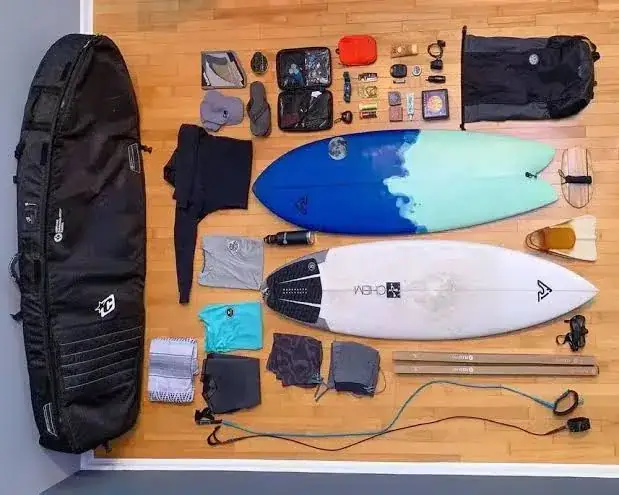
A durable surf travel bag can double as an effective packing tool to eliminate secondary checked luggage fees. Travelers can wrap fragile clothing, towels, and wetsuits around the rails of their surfboards to provide extra padding against rough airport handling. This clever packing strategy keeps boards safe while freeing up space in your carry-on bag, allowing you to bypass standard luggage fees entirely. However, you must monitor total bag weight to avoid crossing the airline’s heavy luggage limits.
Essential Field Repair Strategies
Leaking dings or broken fins can easily ruin a good surf session and force you into making expensive emergency purchases at resort shops. Carrying a basic, travel-sized repair kit containing solar-cure resin, sandpaper, and extra fin keys allows you to fix minor damage right on the beach. Taking care of small repairs yourself avoids costly repair shop fees and keeps you in the water during key swell windows. It also prevents water logging, which can permanently ruin an expensive high-performance board.
Risk Topography and Compounding Financial Failure Modes
Failing to analyze financial risks can lead to a chain reaction of unexpected costs that quickly drain your travel accounts.
The Risk of Tight Flight Connections
Booking tight connections through different airlines to save money is a common strategy that introduces major financial risks. If your first flight faces a short delay, you can easily miss your connection, leaving you stranded in a transit airport. Even worse, airlines often fail to transfer oversized boardbags quickly during tight layovers, leaving you without your gear for days. Resolving these issues often requires paying last-minute ticket change fees and expensive airport hotel rates that wipe out your initial savings.
The Financial Threat of Surf Injuries
Surfing over shallow reefs or crowded beach breaks involves real physical risks that can quickly result in costly medical situations. Standard health insurance plans rarely cover international sports accidents or emergency medical evacuations from remote coastal villages. Traveling without a dedicated adventure sports medical policy leaves you vulnerable to massive out-of-pocket medical bills if an accident occurs. A solid travel insurance plan is a minor upfront cost that protects you from catastrophic financial losses in the field.
Long-Term Expense Governance and Seasonal Maintenance
Maintaining low travel costs over years of surf trips requires structured expense tracking and strategic planning around global weather cycles.
Using Shoulder Seasons to Save
Every major surf zone has a specific peak season defined by massive swells, along with a distinct off-season marked by poor winds or flat seas. The shoulder seasons—the transition months right before or after the peak—offer the ideal balance of affordable pricing and good wave conditions. During these windows, surf camps and regional airlines routinely cut their rates to fill empty rooms and planes. Planning trips during these shoulder periods allows surfers to enjoy excellent waves at a fraction of peak-season costs.
Building a Long-Term Surf Travel Budget
Dedicated surfers treat travel planning as an ongoing financial process rather than a series of impulsive, one-off purchases. Setting up a dedicated savings account specifically for surf travel helps you build a steady pool of capital over time. This financial cushion allows you to strike quickly when airlines announce flash sales or when major swells pop up on long-range forecast models. Tracking expenses across multiple trips also helps you identify which regions offer the best return on your training investment.
Metric Evaluation and Tracking Systems
Refining your surf travel budget requires setting up clear, simple systems to track your real expenses against actual time spent in the water.
Input vs. Output Budget Metrics
Effective financial tracking looks at both upfront planning choices and actual field results:
-
Planning Inputs: Total airfare including gear fees, fixed accommodation costs, pre-paid coaching packages, and mandatory insurance premiums. These numbers establish your baseline financial footprint before you leave home.
-
Field Results: Total hours spent surfing, wave count per session, independent local transport expenses, and emergency gear repair costs. These figures reveal the true efficiency of your planning choices.
Combining Numbers with Experience Quality
A successful trip balances low expenses with a high-quality training environment. Tracking your cost-per-wave ratio provides an objective look at the financial efficiency of a destination. However, this numerical data must be balanced with qualitative factors, such as the accuracy of your coach’s feedback and the friendliness of the local lineup. Using this balanced approach ensures you cut unnecessary costs without compromising your safety or long-term athletic progress.
Deconstruction of Common Budgetary Misconceptions
The surf travel world is full of traditional advice that often leads to inefficient spending habits when applied to modern destinations.
Myth 1: Group Packages Always Save Money
Many travelers assume that booking a group package at a major surf resort automatically guarantees a lower per-person rate. In reality, these group packages often include high profit margins for basic services you could easily organize yourself. For groups of three or more surfers, renting a private coastal villa and hiring a dedicated local guide is frequently much cheaper than paying individual resort rates.
Myth 2: Buying Cheap Gear Saves Money Long Term
Choosing low-quality boardbags, cheap leashes, or budget fins to save a few dollars is a common error that backfires in the field. Cheap equipment routinely fails under stress, leading to broken surfboards, lost fins, or avoidable physical injuries in heavy surf. Investing in durable, high-quality hardware prevents costly gear failures and saves money over years of regular use.
Myth 3: Local Surf Guiding is a Waste of Money
Experienced independent surfers often skip hiring local guides to save cash, believing they can decode new breaks using online charts alone. However, this choice can lead to wasted sessions hunting for peaks or paddling into dangerous currents during bad tide windows. Paying a knowledgeable local guide for a few sessions helps you understand the lineup quickly, maximizing your wave count and protecting your safety.
Ethical Dynamics, Local Economies, and Community Impact
When cutting travel costs, surfers must ensure their budgeting choices do not exploit or harm the coastal communities they visit.
Supporting Host Communities Directly
An ethical budget strategy focuses on shifting your travel spending away from foreign-owned corporate resorts and directly into the local economy. Staying at family-run homestays, eating at neighborhood diners, and hiring local independent coaches ensures your money supports the community hosting you. This direct support creates sustainable economic benefits for residents, helping protect the beach infrastructure and local marine environments for the long term.
Practicing Low-Impact Environmental Habits
Reducing expenses goes hand in hand with minimizing your environmental footprint in fragile coastal zones. Avoiding single-use plastic bottles, using reef-safe sunscreen, and walking to local breaks rather than renting private cars cuts personal costs while protecting marine life. Respecting local lineup etiquette and supporting community-led beach cleanups helps build positive relationships between traveling surfers and local residents, ensuring these beautiful destinations remain open and welcoming for years to come.
Conclusion
Successfully reducing travel costs for surfing camps requires a smart blend of seasonal planning, unbundled logistics, and direct support for local economies. True financial efficiency comes from analyzing the total cost of a destination—including hidden transit and gear fees—rather than simply choosing the cheapest sticker price. By taking control of your own itinerary, protecting your equipment, and staying open to flexible shoulder-season travel, you can enjoy premium surf experiences without overspending. Ultimately, a well-managed budget protects your hard-earned capital, keeps you safe in the water, and allows you to dedicate more time to mastering the sport you love.