Boutique Surf Camp Architecture: Top Operational Planning Frameworks
The institutionalization of luxury adventure sports has fundamentally reshaped coastal hospitality infrastructure. For decades, the surf travel market operated primarily on an informal, low-yield economic model characterized by rustic surf camps and basic guiding services. Modern surf tourism has evolved to include highly specialized, capital-intensive asset classes designed for discerning, high-net-worth individuals. These premium operations do not merely sell access to waves; they manage highly predictable, engineered athletic experiences across challenging coastal environments.
Developing a premium surf operation requires a deep understanding of marine mechanics, luxury hospitality architecture, and risk management systems. Unlike standard resorts where guest activities are confined to stable property boundaries, a surf lodge operates within dynamic, unpredictable open-ocean environments. Shifting tides, wind shifts, and deep-ocean swells present constant challenges to scheduled guest activities. Consequently, high-end operators must deploy structured operational blueprints to ensure predictable, high-quality athletic instruction while maintaining strict safety standards.
To evaluate these operations objectively, investors, planners, and travelers require a clear, analytical evaluation framework. This article provides a comprehensive analysis of the mechanical, financial, and logistical systems that define high-end surf operations globally. By breaking down pedagogical structures, vessel logistics, risk models, and resource allocation frameworks, this guide establishes an objective standard for the industry. The goal is to convert subjective luxury travel planning into an structured, data-driven assessment process.
Understanding “top boutique surfing camps plans”
The industry phrase “top boutique surfing camps plans” is frequently misinterpreted within mainstream travel media. Lifestyle publications routinely define these plans by superficial aesthetic metrics, including infinity pools, high-end interior design, or gourmet food menus. While premium amenities are standard for luxury hospitality, focusing solely on comfort ignores the technical infrastructure required to manage elite athletic progression. A truly optimized operational plan must seamlessly integrate premium hospitality with sophisticated coaching frameworks and advanced marine logistics.
Biomechanical Analysis and Pedagogy
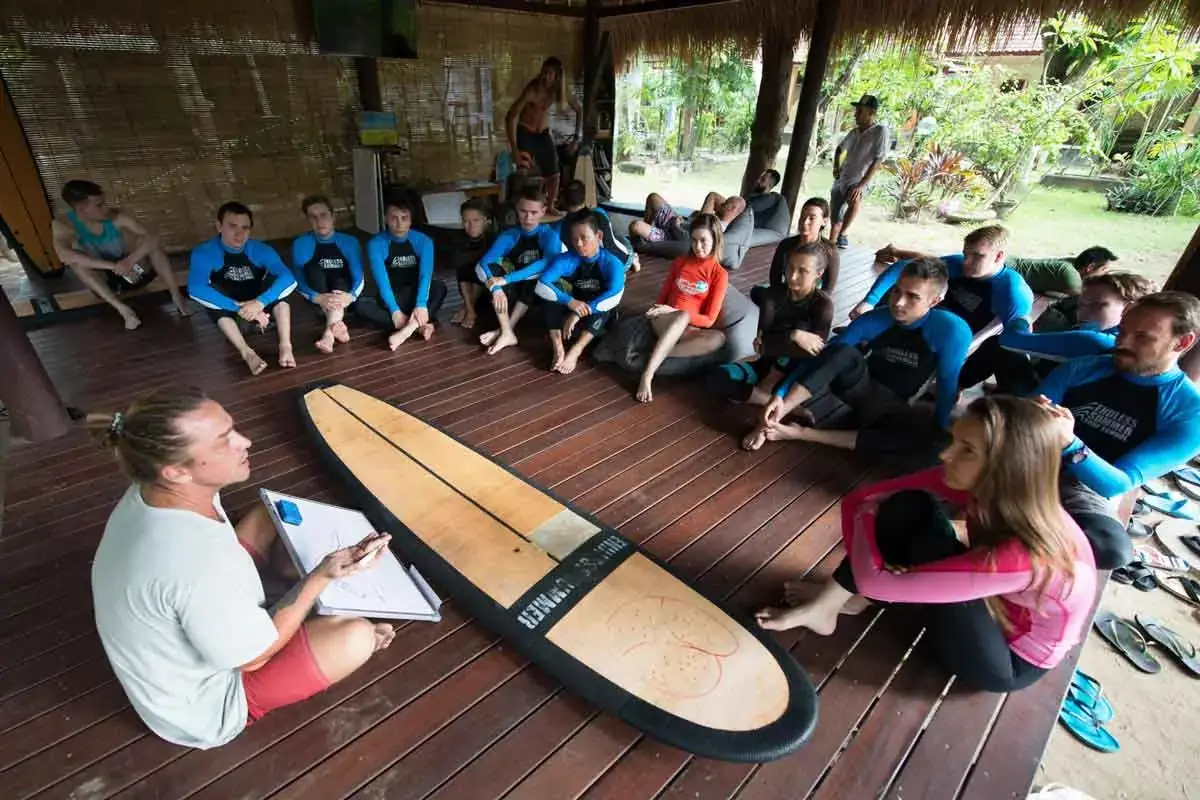
A major industry misunderstanding is that high-end guiding can substitute for structured athletic pedagogy. High-quality operational plans discard informal “guiding” models in favor of precise, data-driven coaching systems. These systems utilize frame-by-frame video telemetry, indoor skate-ramp simulators, and real-time radio headsets to analyze a guest’s movement patterns. Without these engineering tools, an individual’s athletic development often plateaus, resulting in a low return on investment for the traveler.
Marine Fleet Infrastructure
Marine fleet logistics form another critical pillar of premium operational design. High-end surf travel often relies on fast, well-maintained aluminum or fiberglass skiffs equipped with dual outboards and satellite communication tools. These vessels allow operations to bypass congested land access routes, giving guests optimal access to changing breaks. If an operator utilizes underpowered vessels or lacks precise local maritime knowledge, guests waste valuable time at suboptimal locations.
Spatial Architecture Dynamics
The spatial layout of a property must be analyzed through an operational lens. High-end programs limit total guest capacity to between 8 and 14 keys to preserve a quiet, distraction-free environment. This low density allows operations to maintain a low 2:1 or 1:1 guest-to-coach ratio, which is essential for customized in-water instruction. The physical property must feature private, restorative living areas alongside structured communal spaces to encourage organic social interaction among professionals.
Deep Contextual Background
The high-end surf tourism market emerged directly from the commercialization of remote surf exploration during the late twentieth century. Early surf travel was defined by independent explorers who traveled to uncharted regions like the Mentawai Islands or Western Australia with minimal logistical support. These pioneers accepted high environmental risks, poor sanitation, and unreliable transport to ride uncrowded waves. This model presented significant barriers to entry for older professionals who possessed capital but lacked wilderness survival skills.
During the late 1990s, operators in the Maldives and Fiji began testing luxury surf resort models. Properties like Tavarua and pasta point proved that affluent travelers would pay premium rates for exclusive wave access coupled with reliable amenities. These early luxury outposts relied on local land concessions or private island rentals to restrict access to adjacent surf breaks. This exclusivity established the economic foundation for high-yield, low-impact surf tourism.
The Rise of Performance-Oriented Models
The market shifted during the 2010s from a passive relaxation focus to active athletic performance. The expansion of digital industries created a new demographic of executive travelers who demanded high-performance coaching rather than simple pampering. This shift forced operators to redesign their business models, transforming traditional luxury resorts into highly technical training facilities.
Today, premium operators must compete by using advanced technology, highly trained coaching teams, and sustainable environmental practices. The integration of modern wave pools and satellite swell tracking tools has created analytical consumers who demand precise execution from their travel plans.
Conceptual Frameworks and Mental Models
To systematically design or evaluate premium surf operations, managers and investors utilize specific conceptual frameworks. These mental models convert complex environmental and physical variables into predictable, operational metrics.
The Micro-Swell Optimization Model
This framework guides daily asset deployment by analyzing the interaction between shifting ocean swells and local sea floor structures. Ocean swells are quantified by deep-water height, wave period, and directional degrees.
-
Zone A (High-Energy Reefs): Requires long-period swells to produce fast, hollow barrel sections. Suited for advanced surfers seeking high-consequence waves.
-
Zone B (Sheltered Points): Realigns directional swell energy along rocky points to create long, predictable walls. Ideal for intermediate surfers developing rotational turns.
-
Zone C (Protected Sandbars): Absorbs refracted wave energy over shallow sand banks to generate gentle whitewater, optimal for absolute beginners.
The limitation of this model is that local wind patterns can ruin a high-quality swell within minutes. Consequently, an operational plan must include flexible transport systems to move guests to sheltered breaks as conditions change.
The Spatial Friction Minimization Framework
This architectural model dictates how a premium property’s physical layout can reduce social friction for executive guests. It categorizes the property into three separate spatial zones:
An effective plan must balance these three zones perfectly. If a property over-allocates space to sanctuary zones, it functions as a standard luxury hotel, increasing guest isolation. If it over-allocates space to synergy zones, it risks causing social exhaustion, which compromises a guest’s rest and recovery.
The Kinetic Return on Investment (kROI) Model
This metric evaluates coaching efficiency by measuring the ratio of structured feedback loops to total minutes spent in the water. High-kROI programs use video telemetry, post-session video analysis, and real-time coaching headsets. Low-kROI programs simply watch guests from a distance without providing specific mechanical adjustments. The primary challenge of high-kROI systems is their high energy requirement, which can cause mental fatigue if a guest expected a casual holiday.
Key Categories and Operational Variations
Premium surf operations are not uniform; they are built around specific business models, environmental constraints, and target demographics.
Private Island Surf Sanctuaries
These ultra-exclusive operations control access to nearby waves through exclusive maritime concessions or private land titles. Located primarily in regions like the Mentawai Islands or the Fijian archipelago, they limit guest capacity to fewer than 12 keys.
-
Trade-off: These properties require massive initial capital expenditure and complex supply chains, which can increase operational vulnerability during economic downturns.
Heli-Supported Mobile Safaris
Operating in remote territories like Alaska, Kamchatka, or parts of Chile, these programs use helicopters or long-range vessels to access uncrowded breaks. They prioritize absolute wave isolation and pristine natural environments.
-
Trade-off: These operations are highly dependent on changing weather patterns, introducing significant financial risks if flights are grounded for extended periods.
Urban Wave Performance Centers
Situated adjacent to modern artificial wave pools in regions like Bristol, Melbourne, or South Korea, these centers focus purely on rapid skill development. They use programmable wave profiles to guarantee highly consistent training conditions.
-
Trade-off: These facilities lack the natural elements and cultural immersion of ocean-based travel, appealing primarily to performance-focused athletes rather than leisure travelers.
Operational Category Matrix
Realistic Decision Logic
When evaluating these diverse business models, developers and investors must align their operational plans with their primary market goals. If the main objective is providing highly predictable training conditions, an urban wave center is the most efficient choice. If the goal is delivering a premium, luxury travel experience, a private island sanctuary provides a better return on investment.
The most common failure mode is selecting a high-risk heli-safari model for a target market that primarily desires predictable comfort and reliable scheduling. This mismatch can lead to operational strain and low customer satisfaction.
Detailed Real-World Scenarios
Analyzing real-world scenarios highlights the complex operational challenges premium surf managers must navigate in the field.
Scenario A: Reef Pass Management in the Indian Ocean
A premium island resort in the Maldives manages twelve high-net-worth guests during a major south swell event in June.
-
Operational Variables: Strong spring tides, shallow coral heads, and a mixed-skill guest group.
-
Decision Point: The manager must decide whether to send the entire group to a challenging reef break or split the fleet across multiple distant breaks.
-
Failure Mode: Deploying a single large vessel to the main reef break to reduce fuel costs, forcing intermediate guests into dangerous conditions.
-
Second-Order Effects: An intermediate guest suffers a serious reef scrape, requiring emergency medical evacuation. This incident disrupts the vessel schedule and damages the property’s reputation for safety.
Scenario B: Sandbar Optimization in South West France
A boutique lodge in Hossegor manages ten corporate executives during a volatile autumn swell cycle in September.
-
Operational Variables: Shifting sandbanks, large 4-meter tidal ranges, and heavy shorebreaks.
-
Decision Point: The coaching team must decide whether to use a local river mouth break or transport guests to a protected harbor break an hour away.
-
Failure Mode: Staying at the local beach break to minimize driving time, exposing guests to an exhausting, unproductive paddle-out.
-
Second-Order Effects: The executives experience rapid muscle fatigue, leading to poor body mechanics and missed training goals for the rest of the week.
Planning, Cost, and Resource Dynamics
The financial architecture of a premium surf operation requires a clear understanding of both direct operating costs and major capital expenditure lines.
Capital Expenditure vs. Operational Expenses
Initial capital costs typically involve acquiring premium beachfront real estate, building low-density luxury villas, and purchasing specialized marine assets. Operational expenses include maintaining high-end watercraft, hiring certified elite coaches, and sourcing high-quality imported food items.
Furthermore, maintaining advanced technical equipment like high-speed cameras and drone telemetry systems adds a fixed cost layer that standard resorts do not face. The table below outlines standard financial ranges for establishing a 10-key premium operation.
Estimated Capital Expenditure and Operational Costs (USD)
Tools, Strategies, and Support Systems
To ensure operational safety and predictable athletic development, premium surf programs must utilize advanced tracking and assessment tools.
Satellite Oceanography Platforms
Operations rely on advanced satellite data from tools like oceanographic models to track deep-sea swell developments long before they reach the coast. This foresight allows management to pre-arrange boat schedules, optimize guide staffing levels, and adjust guest training tracks with high precision.
High-Speed Video Telemetry
Capturing movement patterns requires high-speed cameras capable of recording at 120 frames per second in high-glare environments. These video records are analyzed in dedicated media rooms using specialized biomechanical software. This process helps coaches identify subtle errors in a guest’s posture, foot placement, or rotational timing.
International Coaching Certifications
It is critical that all instructional staff hold advanced certifications from recognized bodies like the International Surfing Association (ISA) alongside professional lifeguard credentials. These certifications guarantee that coaches are highly trained in ocean rescue methods, emergency first aid, and structured sports science principles.
Risk Landscape and Failure Modes
The combination of luxury hospitality and high-consequence ocean sports creates a complex risk profile that demands proactive mitigation.
Ocean and Environmental Hazards
The open ocean presents unavoidable risks, including hidden rip currents, shallow reef shelves, encounters with marine life, and rapid weather shifts. Without dedicated water safety craft and professional lookouts, an injured or fatigued guest faces significant dangers. If an operation fails to maintain a clear line of sight to all surfers, emergency response times can increase to dangerous levels.
Asset and Logistical Supply Failures
Premium operations are often located in remote areas, making them vulnerable to supply chain disruptions, fuel shortages, or mechanical vessel breakdowns. A single engine failure on a primary transport boat can stall guest schedules, leading to canceled sessions and lower customer satisfaction.
Risk Mitigation Protocols
To manage these compounding risks, premium operations should deploy clear safety systems. These protocols include using duplicate engines on all transport boats, keeping comprehensive trauma kits on site, and establishing direct communication lines with regional emergency medical aviation networks.
Governance, Maintenance, and Long-Term Adaptation
Maintaining high service standards requires ongoing operational reviews, as property conditions, local environmental factors, and coaching teams can shift over time.
Rigorous Asset Maintenance Cycles
Saltwater environments cause rapid wear on marine hulls, outboard engines, and technical coaching gear. High-end operations use structured preventive maintenance schedules, checking hulls weekly and servicing engines every 100 hours of use. Failing to adhere to these maintenance schedules increases the risk of unexpected equipment failure during guest excursions.
Adaptive Coastal Management
Coastal topographies are constantly changing. Seasonal storms, rising sea levels, and local coastal construction can alter how sandbars form and waves break.
An operation that once featured an ideal beginner break can transform into a heavy shorebreak if winter storms wash away local sandbars. Keeping track of these environmental shifts allows operations to adjust their guiding schedules and keep guests safe.
Operational Pre-Booking Evaluation Checklist
To ensure an operational plan meets safety and premium service standards, management teams can utilize a tiered checklist prior to opening guest bookings.
-
Marine Fleet Safety: Verify that all transport boats feature dual outboard engines, active satellite tracking devices, and complete ocean rescue gear.
-
Pedagogical Infrastructure: Confirm that video analysis rooms are fully operational, high-speed cameras are calibrated, and real-time radio communication helmets are charged.
-
Emergency Medical Plans: Check that on-site trauma kits are fully stocked, staff certifications are up to date, and evacuation contracts with regional medical aviation teams are active.
-
Digital Connectivity: Ensure the property features reliable high-speed satellite internet backed up by redundant power generators to support remote-working executive guests.
Measurement, Tracking, and Evaluation
Evaluating the success of a high-end surf program requires monitoring both quantitative athletic metrics and qualitative indicators of guest satisfaction.
Quantitative Athletic Metrics
Coaches track a guest’s physical progression by recording specific, objective data points across consecutive training sessions:
-
Wave Entry Efficiency: The ratio of waves successfully caught to total waves paddled for, measuring positioning accuracy.
-
Rotational Angles: The precise degree of upper-body rotation executed during top and bottom turns, calculated via video review software.
-
Session Staying Power: The total minutes a guest can actively paddle and ride waves before their physical performance drops due to fatigue.
Qualitative Success Indicators
Beyond quantitative metrics, qualitative outcomes help determine if a program aligns with a guest’s long-term goals. These include an increase in ocean confidence, an improved ability to read changing swell patterns independently, and building meaningful connections within a network of professional peers. If a guest leaves a property feeling physically tired but completely confident in their ability to analyze new surf breaks alone, the operational design has delivered excellent value.
Common Misconceptions and Oversimplifications
Several persistent myths surround the development and selection of premium surf programs, often leading to poor planning decisions.
-
Myth: Premium branding guarantees superior coaching. In reality, high-end branding often reflects luxury accommodation and fine dining rather than the quality of the surf instruction. Some of the most effective technical coaching is found at smaller, instruction-focused academies rather than standard luxury resorts.
-
Myth: Proximity to famous waves ensures an optimal guest experience. Building a premium lodge near a world-famous, high-performance break is often a mistake. These spots are frequently crowded and highly competitive, which can create an intimidating, unproductive environment for intermediate guests.
-
Myth: Artificial wave pools eliminate the need for ocean-based training. While wave pools offer highly consistent training conditions, they cannot replicate complex open-ocean variables like changing rip currents, tides, and wind shifts. A complete athletic program must combine pool-based mechanics with natural ocean experience.
Ethical, Practical, and Contextual Considerations
The growth of luxury surf tourism introduces significant social, economic, and environmental responsibilities that operators must navigate carefully. Premium lodges often sit within developing coastal communities that face economic challenges and limited public infrastructure.
Local Economic Integration
Operators should design their programs to employ local community members across all organizational levels, paying them fair, sustainable wages. Some foreign-owned properties send their profits abroad, which can create economic imbalances within the host community. Investing in local talent and supporting community projects helps build a sustainable, mutually beneficial relationship.
Environmental Care and Lineup Etiquette
Premium resorts can place a heavy strain on local resources, leading to issues with waste disposal, water scarcity, and reef degradation. High-end operations should lead the way in environmental practices, utilizing solar energy grids, onsite water filtration, and advanced waste treatment systems.
Furthermore, guests must be taught to respect local lineup etiquette. Overcrowding a break or ignoring right-of-way rules creates friction with local surfers and compromises safety for everyone in the water.
Conclusion
Successfully executing top boutique surfing camps plans requires an analytical approach that balances premium hospitality, data-driven athletic coaching, and safe marine logistics. A premium surf operation is more than just a luxury hotel near the beach; it is an engineered system designed to manage environmental risks and deliver predictable athletic progress. By looking past superficial marketing and focusing on core technical infrastructure, investors and travelers can build and choose programs that offer sustainable athletic growth and safe open-ocean experiences.
Ultimately, the long-term success of a premium surf program depends on how well its operational plans adapt to changing environmental and market conditions. Whether managing an exclusive island sanctuary or a high-tech wave center, success requires a relentless focus on safety, asset maintenance, and community integration. Approaching surf tourism with this level of structural rigor ensures that financial investments deliver lasting value for both operators and guests.