How to Choose a Surfing Camp Without Experience: Complete First-Timer Strategy
The expansion of global surf tourism has created an overwhelming array of options for beginners. Historically, entry into the sport was gatekept by geography, localized subcultures, and informal mentoring networks. Today, commercial surf camps offer structured entry points for individuals with zero ocean background. However, the lack of standardized terminology in the travel market complicates the selection process. A mistake in choosing an operational framework can result in a frustrating, unproductive, or hazardous trip.
Prospective students frequently evaluate potential destinations using metrics that do not influence skill acquisition or physical safety. Marketing materials highlight infinity pools, social gatherings, and beachfront yoga decks. While these hospitality elements influence overall comfort, they do not impact pedagogical quality or ocean risk management. A true training environment prioritizes instruction architecture, favorable coach-to-student ratios, and appropriate wave mechanics. This analysis deconstructs the structural variables that define high-quality introductory operations globally.
Navigating the transition from land-based life to a dynamic ocean environment requires systematic support. Adult beginners have unique physical limitations, cognitive hurdles, and safety concerns that differ from younger learners. A suitable program must address these realities through explicit instruction rather than simple exposure. This guide provides an objective baseline for evaluating surf schools, empowering newcomers to make informed choices. By analyzing logistics, training methods, and safety frameworks, this piece serves as a comprehensive reference for modern surf travelers.
Understanding “how to choose a surfing camp without experience”
The core challenge of learning how to choose a surfing camp without experience lies in separating hospitality marketing from actual athletic instruction. Most consumers approach this choice as a standard leisure vacation booking. This perspective overlooks the fact that surfing is an interactive pursuit based in an unpredictable natural environment. A beginner cannot simply purchase access to a skill; they must find an organization that can systematically teach that skill to someone with no background.
A common issue in this market is the tendency to group all beginner programs into a single category. This oversimplification assumes that any camp near a beach can successfully guide a first-time surfer. In reality, teaching someone who cannot identify a rip current requires different protocols than guiding an intermediate surfer. True introductory programs focus heavily on ocean literacy, board management, and safety drills. Without these foundational elements, students often leave with a false sense of security or a fear of the ocean.
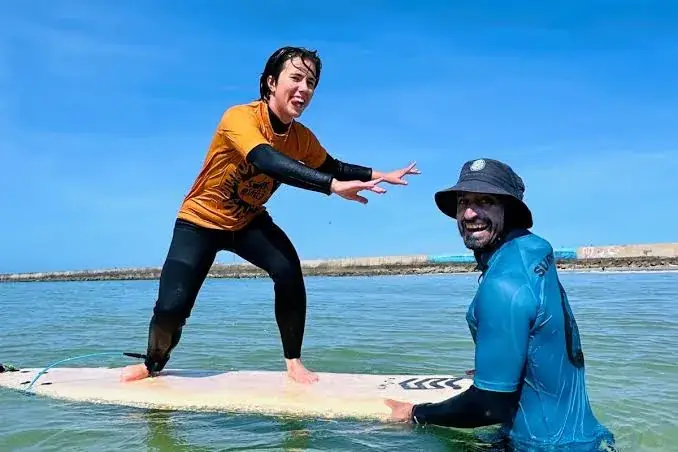
Furthermore, evaluating an operation requires understanding the difference between short-term entertainment and genuine skill acquisition. Many tourist-oriented schools measure success by whether a student stands up on a board during their first lesson. To achieve this, instructors push the student into pre-broken white-water waves on oversized soft-top boards. While this provides an immediate thrill, it skips the essential skills of paddling, wave selection, and timing. A technically sound program prioritizes independence, teaching students how to read the water and catch waves without assistance.
The Evolution of Commercial Surf Pedagogy
In earlier decades, learning to surf was an unguided process of trial and error. Newcomers purchased used equipment, paddled into local lineups, and figured out mechanics through observation and repetition. This informal approach required significant time, high physical fitness, and a tolerance for cultural gatekeeping. The global surf market paid little attention to non-local beginners, viewing them as disruptions to the lineup rather than students of the sport.
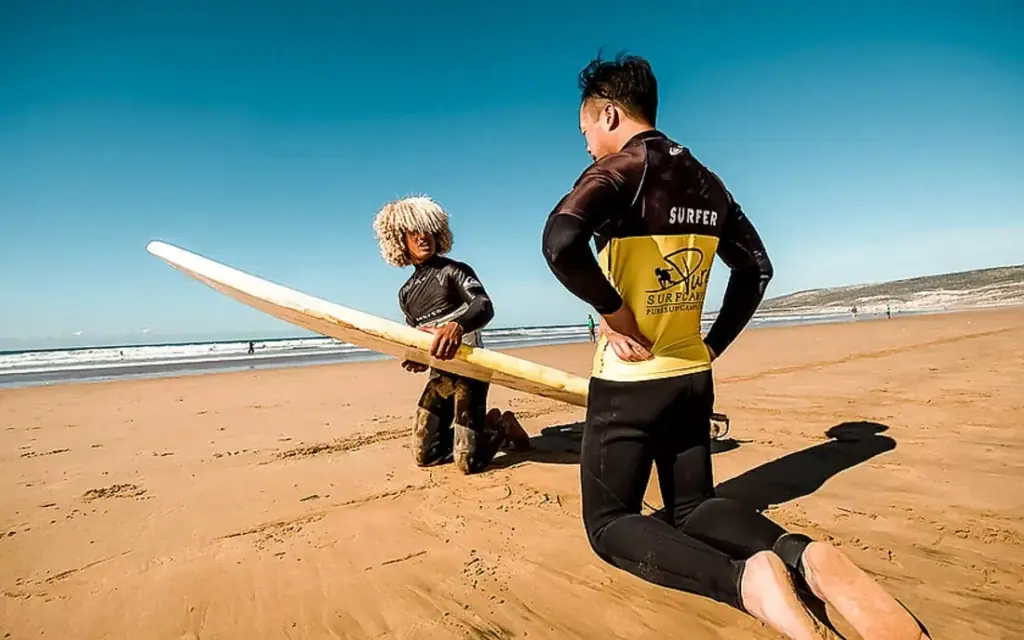
The growth of adventure travel in the late twentieth century drove the creation of dedicated surf schools. Early camps were basic operations, often consisting of shared beach housing and informal guidance from local surfers. These early programs lacked standardized safety procedures, structured lesson plans, and tailored equipment. The focus was primarily on immersion, leaving students to adapt to ocean conditions with minimal technical breakdown.
The Rise of Structured Training Systems
Over the past twenty-five years, rising global demand has driven the professionalization of surf coaching. National and international organizations established formal instructor certifications to standardize water safety, first aid, and basic mechanics. Modern camps integrate tools like video feedback, land-based balance training, and targeted stretching routines into their daily schedules. This evolution has transformed surf schools from simple equipment rental shops into structured educational institutions.
Cognitive and Mechanical Learning Models
Adult beginners face distinct cognitive hurdles when entering the ocean for the first time. Children often learn complex physical skills through intuitive replication and play. Adults, by contrast, rely on intellectual analysis and require clear explanations of movement patterns. This analytical focus can be an asset, but it can also lead to hesitation if the student feels overwhelmed by the environment.
Overcoming Survival Reflexes in the Water
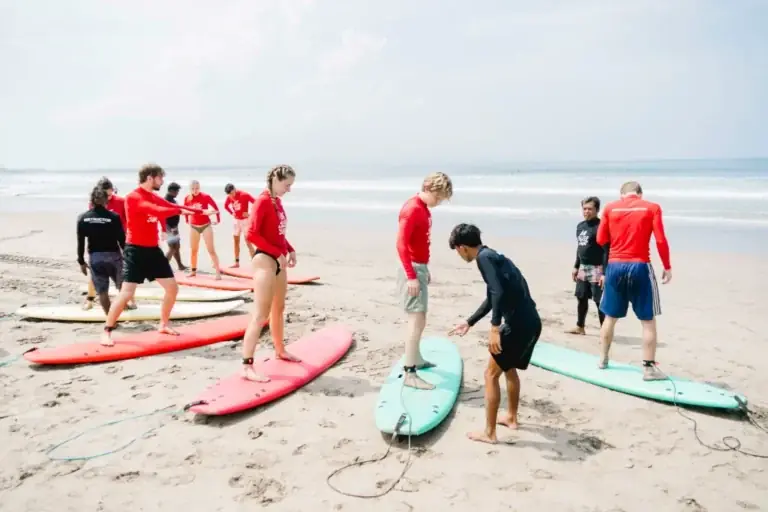
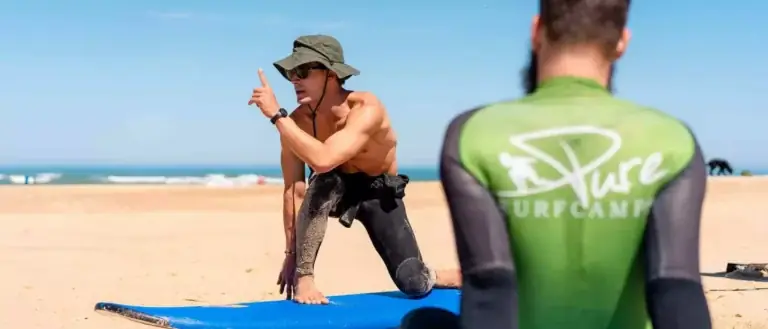
The primary obstacle for a first-time surfer is the body’s natural defense mechanism against an unstable environment. When a wave approaches, natural instincts often prompt actions that make a surfboard unstable, such as looking down or gripping the rails tightly. A structured surf program must address these survival reflexes directly on land before entering the ocean. By practicing proper postures on solid ground, students build the muscle memory needed to override these counterproductive instincts.
The Framework of Progressive Isolation
To build confidence without overwhelming the student, high-quality operations use a teaching method called progressive isolation. This approach breaks down the surfing process into separate, manageable components:
-
Prone Position Mastery: The student learns to lie balanced on the center of the board, maintaining optimal trim without rocking side to side.
-
Paddle Mechanics: The focus shifts to clean, alternating arm strokes that maximize forward movement while conserving energy.
-
The Pop-Up Sequence: Instructors break the transition from lying to standing into distinct, repeatable steps practiced on land.
-
Lineup Integration: Once these individual mechanics are stable, the student learns to combine them in calm, shallow water.
The Limits of Accelerated Instruction
While structured methods accelerate early progress, physical limitations remain. Paddling fitness takes time to develop, and short-term camps cannot quickly replicate the upper-body endurance built over months of training. Additionally, reading the ocean is a visual skill that requires hours of observation under varying conditions. Reputable programs focus on teaching foundational safety habits and self-correction, rather than promising mastery in a short period.
Typology of Beginner Surf Environments
The surf travel market features several distinct operational models, each suited to different learning styles, budgets, and physical capabilities. Understanding these differences helps ensure a first-time surfer selects a program tailored to their needs.
Surf-First Training Academies
These operations function as dedicated schools, often located in areas with highly consistent, gentle waves like parts of Central America or Southwest Europe. Their schedules focus heavily on training, combining daily ocean sessions with video reviews, oceanography lectures, and fitness training. Accommodations are functional, designed to support rest and recovery between sessions. The primary advantage is rapid development, though the intense schedule can be physically demanding for some.
Wellness and Lifestyle Surf Retreats
These programs blend introductory surf coaching with broader wellness activities, such as daily yoga classes, spa treatments, and healthy group dining. The pace is more relaxed, allowing guests to skip sessions if they feel fatigued. While these retreats offer high comfort and a supportive social environment, the surfing instruction can be less technical. They are well-suited for travelers seeking a balanced vacation rather than an intense athletic training program.
All-Inclusive Resort Surf Schools
Operating within larger luxury resorts, these schools cater to travelers who want to sample surfing alongside other recreational activities. Lessons are typically booked day by day, utilizing the resort’s private beach or nearby breaks. This model offers premium amenities and flexibility for families or couples with varied interests. However, the instruction often relies on large group sizes and seasonal staff, which can limit individual feedback and technical progression.
Operational Model Analysis
Navigating the Selection Choice
Choosing among these categories requires an honest look at your goals, current fitness, and comfort preferences. A fitness-focused traveler will likely feel restricted by the slow pace of a wellness retreat. Conversely, someone looking for a relaxing vacation may find the strict routine of a training academy exhausting. Aligning your personal expectations with the camp’s operational style is essential for a rewarding trip.
Practical Selection and Field Scenarios
To understand how these factors work in practice, let’s look at a few common archetypes of first-time surf camp seekers. These examples illustrate the key decision points and trade-offs involved in selecting a program.
Scenario A: The Active Professional with Low Swim Comfort
This profile involves an adult who is physically fit from dry-land training like weightlifting or running, but has limited experience swimming in open, moving water.
-
Analysis: This individual has the strength for paddling but may experience anxiety if caught in a current or separated from their board.
-
Optimal Choice: A specialized training academy located on a shallow, waveless sandbar bay where students can stand comfortably at any time.
-
Risk Factors: High physical strength can lead to paddling out too far before establishing basic ocean comfort and water safety skills.
-
Second-Order Effects: Rapid muscle fatigue from tense paddling, which can be reduced by focusing on water relaxation drills.
Scenario B: The Mature Traveler Seeking a Balanced Vacation
This archetype features a traveler over forty who wants to try surfing but prioritizes physical safety, good recovery, and private amenities.
-
Analysis: The main requirements are low coach-to-student ratios to ensure close supervision, gentle waves, and comfortable lodging to aid recovery.
-
Optimal Choice: A boutique wellness retreat with a strict maximum ratio of three students per coach, using lightweight high-volume foam boards.
-
Risk Factors: Joint stiffness from inadequate warm-ups or muscle strain from using a board that is too small or heavy.
-
Second-Order Effects: Slower technical progress offset by lower injury risk and better overall physical recovery.
Scenario C: The Solo Traveler Seeking Community and New Skills
This scenario involves a solo traveler looking to learn the basics of surfing while connecting with a community of fellow beginners.
-
Analysis: The ideal setup combines structured daytime training with communal living spaces and organized group dinners in the evening.
-
Optimal Choice: A dedicated surf-first training enclave that offers shared villa lodging, group transport, and communal video analysis sessions.
-
Risk Factors: Social activities can sometimes conflict with the rest needed for early morning surf sessions, leading to fatigue in the water.
-
Second-Order Effects: High motivation driven by group encouragement, helping students overcome early frustrations with the sport.
Economic Realities and Capital Allocation
Understanding how to choose a surfing camp without experience requires a practical look at budget allocation. The total cost of a surf trip includes several variables beyond the base package price.
Dissecting Hidden and Structural Costs
When evaluating different options, travelers must look past the advertised weekly rate. A complete budget includes flights, airport transfers, specialized travel insurance covering action sports, and local taxes. Additionally, many programs charge extra for equipment insurance, video packages, or private coaching sessions. These hidden costs can add twenty to forty percent to the initial base price of a trip.
The Long-Term Cost of Low-Budget Options
Selecting a camp based solely on the lowest price can lead to unexpected trade-offs in quality and safety. Low-cost operations often maintain large group sizes, leaving coaches with limited time for individual feedback. They may also use worn-out rental equipment, such as waterlogged foam boards or poorly fitting wetsuits. Most importantly, cheap camps may hire uncertified guides who lack advanced water rescue training, increasing safety risks for beginners.
Comprehensive Capital Distribution Framework
Technical Diagnostics and Support Systems
Modern beginner surf coaching uses specialized tools to help students understand ocean movement and body mechanics. These systems make learning safer and more efficient for newcomers.
The Impact of Targeted Video Analysis
Video review is highly beneficial for beginners, who often struggle to feel what their body is doing during a dynamic movement. An instructor can explain a pop-up posture on land, but a student may still lean too far forward once on a wave. High-frame-rate video allows coaches to pause and review a student’s mechanics step by step. Seeing their own alignment errors alongside examples of correct technique helps students make precise adjustments.
Purpose-Built Beginner Surf Equipment
The design of a beginner’s surfboard significantly affects their early progress. High-quality introductory camps provide wide, thick soft-top boards with significant volume and stability. These boards paddle easily, catch small waves early, and provide a stable platform for standing up. High-quality operations maintain a diverse inventory of boards, allowing coaches to match equipment to a student’s height, weight, and fitness level.
The Limits of Technology in the Field
While technical tools speed up learning, they cannot replace time spent in the water. Video review identifies errors but does not build the core muscles needed for paddling. Similarly, a stable soft-top board helps with early balance but cannot teach a student how to read changing current patterns. Technical tools are supports for real-world experience, not substitutes for time spent observing and interacting with the ocean.
Risk Typology and Mitigation Protocol
The ocean is a dynamic environment with natural hazards that require careful management, particularly for those with no prior surf experience. Reputable camps prioritize safety through clear operational rules, qualified staff, and thorough ocean education.
Dynamic Waterway Transitions and Currents
Beginners often struggle to spot subtle changes in the water, such as rip currents or changing sandbars. A professional camp manages these risks by choosing well-sheltered beaches with gentle, predictable waves. Instructors conduct detailed briefings on the sand before every session, pointing out current patterns, hazards, and safe zones. This guidance helps prevent panic and teaches students how to navigate the water safely.
Equipment Handling and Impact Safety
Many first-time injuries result from improper board handling rather than the waves themselves. A large surfboard can easily be pushed back by an incoming wave, striking a student if they are positioned incorrectly. To reduce these risks, high-quality camps teach explicit safety habits during the very first briefing:
-
Keep the surfboard perpendicular to incoming waves to prevent it from being caught and thrown by the white water.
-
Never position yourself between the surfboard and the open ocean, ensuring the board is always downwind or down-current.
-
Cover your head with both arms whenever falling off the board to protect against impact.
-
Maintain a safe distance of at least two board lengths from other surfers in the water to avoid collisions.
Post-Camp Adaptation and Skill Longevity
A major challenge for surf camp guests is maintaining their new skills once they return to daily life on land. Building long-term ability requires regular practice, physical conditioning, and ongoing study outside of the camp setting.
Managing the Transition to Independent Surfing
During a structured camp, students rely on a controlled environment, optimized equipment, and constant coach supervision. Back home, independent beginners often face colder water, less predictable waves, and crowded lineups without an instructor’s guidance. This shift can be discouraging if the surfer lacks a clear strategy for independent practice.
Designing a Simple Home Training Routine
To keep their new skills sharp, first-time surfers should create a simple training plan based on their camp experience. This routine should focus on fitness and basic mechanics to keep relevant muscle groups active:
-
Paddling Fitness: Regular swimming or upper-body strength training to maintain the shoulder endurance needed for paddling.
-
Pop-Up Practice: Doing regular pop-up drills on a yoga mat to reinforce smooth transitions and correct foot placement.
-
Balance and Mobility: Core exercises and hip mobility work to support a stable, flexible stance on the board.
-
Ocean Literacy: Reading books or watching tutorials on weather patterns, tides, and surf forecasting to build a deeper understanding of ocean mechanics.
Evaluation Frameworks and Tracking Metrics
Tracking progress in a fluid sport like surfing requires moving past general impressions like “having a good session.” High-quality programs use clear observation metrics to measure growth in paddling, safety awareness, and riding balance.
Input vs. Output Tracking in the Surf
To accurately evaluate a beginner’s progress, coaches look at both input habits and output results:
-
Input Habits (Process-focused): Board trim position, paddle hand shape, looking toward the beach during a pop-up, and staying clear of hazards. These habits show a student’s technical foundation and safety awareness.
-
Output Results (Outcome-focused): Total seconds standing on the board, wave count per hour, and successful white-water entries. These outcomes depend directly on how well the input habits are executed.
Qualitative and Quantitative Progress Indicators
A balanced tracking system combines basic numbers with qualitative feedback from coaches. For instance, a student might track their wave entry rate—the number of waves caught versus paddled for—alongside video reviews of their standing posture. Documenting these basics helps beginners see clear improvements and focus on specific areas that need adjustment.
Deconstruction of Common Beginner Myths
The surf travel market contains several common misconceptions that can lead beginners to choose inappropriate programs or form unrealistic expectations about their progress.
Myth 1: You Must Be an Expert Swimmer to Try Surfing
Many people assume that learning to surf requires advanced, competitive swimming skills. While basic water comfort and the ability to swim unassisted are essential for safety, you do not need elite swimming times. High-quality beginner camps operate in shallow water where students can comfortably touch the bottom. Coaches prioritize building ocean confidence step by step, ensuring no one is pushed into conditions beyond their swimming ability.
Myth 2: Smaller Boards Help You Progress Faster
A frequent mistake among beginners is wanting to move to a smaller, professional-style board too quickly. Smaller boards look sleek but lack the buoyancy and stability needed to catch waves easily. Using an undersized board early on leads to less riding time, faster fatigue, and slower overall progress. High-volume foam boards maximize your wave count, providing the stability needed to build clean, solid mechanics.
Myth 3: Tropical Destinations Offer the Best Learning Conditions
Many travelers assume that warm, tropical beaches provide the best environment for a first surf trip. While warm water is comfortable, tropical surf spots often feature crowded lineups, intense sun, and shallow coral reefs. Cooler-water regions like parts of Europe or the Pacific Northwest often provide highly professional training academies, uncrowded beach breaks, and consistent, gentle swells that are excellent for learning safely.
Environmental and Structural Variables
A successful first surf trip depends on matching your goals with the right natural environment. Wave behavior varies by location, and different types of surf breaks offer distinct conditions for beginners.
Beach Contours and Wave Mechanics
The shape of the seafloor determines how waves break and how easy they are to ride for beginners:
-
Sandy Beach Breaks: Waves break over shifting sandbars, offering a soft landing surface and straightforward water entries. They are the ideal choice for first-time surfers.
-
Point Breaks (Rocky Points): Waves wrap around a point of land, creating long, predictable rides. While excellent for practice, they often feature rocky shorelines that require careful navigation.
-
Reef Breaks (Rock or Coral Seafloors): Waves break consistently over a fixed underwater structure. They are generally unsuited for beginners due to the sharp, shallow bottom hazards.
Aligning the Environment with Safety
First-time surfers should look for destinations with wide sand beaches, minimal cross-currents, and deep water channels. These features create a more forgiving environment, allowing students to focus on mechanics without managing complex natural hazards. Assessing these natural variables alongside coaching quality ensures a safer, more productive introduction to the sport.
Conclusion
Choosing a surfing camp without experience requires moving past holiday aesthetics to focus on safety, pedagogy, and location dynamics. A beginner’s progress relies on clear, structured coaching, low student-to-coach ratios, and an environment suited to early skill acquisition. By prioritizing these structural elements over resort luxuries, new surfers can find a program that provides a safe, enriching introduction to the ocean. Investing time into selecting the right operational model helps ensure a rewarding trip and builds a solid foundation for long-term enjoyment of the sport.