Best Summer Surfing Camps United States: Seasonal Coastal Analysis
The seasonal migration of athletes and recreational enthusiasts to the coastlines of North America highlights a distinct structural industry within outdoor education. Summer introduces specific meteorological shifts that completely alter wave mechanics across the Atlantic, Pacific, and Gulf basins. As high-pressure systems stabilize and water temperatures climb, coastal regions transform into optimal training grounds for wave riders. This environmental shift supports the operational foundation for premium seasonal training institutions. These programs are systematically engineered to maximize athletic development within tight summer weather windows.
Evaluating these coastal academies requires looking past the casual consumer imagery of summer beach recreation. The nearshore environment functions as a dynamic fluid laboratory where seasonal wind patterns meet distinct underwater topographies. For any student, participating in a summer program involves navigating complex marine variables. These include managing sandbar degradation from lack of winter swells, handling localized wind-swell periods, and executing biomechanical adjustments under shifting tidal ranges. High-tier camps separate themselves from basic operations by embedding formal micro-forecasting and physical kinetics directly into their baseline training.
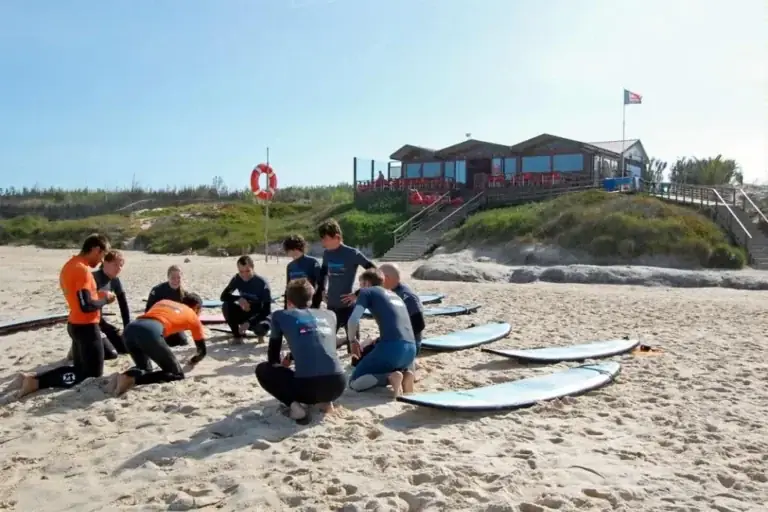
The economic and logistical landscape of these operations has adapted significantly to meet rising standards of professional accountability. Modern participants no longer look for simple unguided water immersion or basic equipment rental services. They expect highly structured athletic environments that mirror elite snow-sports academies or professional training facilities. This cultural demand has driven the growth of comprehensive camp setups. These programs utilize multi-angle video analysis, land-based movement simulators, and clear safety architectures to ensure real skill development occurs over multi-day training blocks.
Understanding the operational blueprints of these summer training institutions provides valuable insights into contemporary marine education. Operating a premium camp involves balancing municipal beach access permits, adhering to strict environmental conservation laws, and mitigating risks within open water systems. As coastal space becomes increasingly regulated and consumer performance expectations rise, these specialized institutions serve as a model for advanced athletic training in natural settings.
Understanding “best summer surfing camps united states”
The phrase “best summer surfing camps united states” defines a specific category of seasonal athletic academies operating along the nation’s ocean borders. This classification specifically covers programs that provide intensive, multi-day instruction during the peak summer months. These operations are distinct from casual, hourly surf lessons through their focus on comprehensive athletic development, ocean literacy, and safety systems. They treat the sport as a complex discipline requiring tailored instructional paths for distinct student cohorts.
Analyzing the Multi-Day Training Structure
A common misunderstanding among consumers is viewing a premium summer camp as a basic hospitality package with added equipment access. In reality, the operational backbone of a high-quality training asset requires significant capital and logistics. True elite camps manage dedicated transport assets, maintain large, diverse surfboard inventories, and employ highly certified coaches and oceanographers. This infrastructure ensures the training schedule adapts smoothly to changing wind patterns, tidal movements, and swell directions.
Deconstructing Regional Variances
Another oversimplification is assuming these summer programs follow a uniform curriculum regardless of geographic location. Because American coastlines feature highly diverse marine ecosystems, a camp’s teaching style is deeply tied to its local geography. A program operating along the rocky point breaks of New England focuses on long-period swell tracking and complex wave wrap dynamics. Meanwhile, an operation situated near the shifting sandbars of the Mid-Atlantic prioritizes quick takeoff timing, short-period navigation, and managing rapid current drift.
Navigating Access and Regulatory Permit Systems
Understanding this educational sector also requires recognizing the strict regulatory environments that govern commercial access to public coastlines. Premium summer camps must secure explicit commercial permits from state park systems, municipal beach authorities, and federal entities like the National Park Service. These permits regulate the maximum number of students allowed in a lineup at one time, which prevents overcrowding and protects sensitive coastal environments. Evaluating these operations involves looking past marketing materials to verify their regulatory compliance and local standing.
Historical Evolution of Seasonal Wave Instruction
The institutional framework for surf instruction in the United States was historically built around a high-volume, entry-level business model. During the surf boom of the late twentieth century, schools proliferated across traditional hubs like southern California, Florida, and Oahu. These early programs focused almost exclusively on providing single-day experiences for summer tourists. The instructional methodology was highly simplified, designed to get a student standing on an oversized board within an hour, without teaching independent ocean safety.
The Rise of Structured Summer Academies
During the late 1990s, the rise of specialized youth and adult travel created a demand for high-performance instruction that went beyond basic beginner lessons. Instructors began developing structured curricula that incorporated video review, breath-hold training, and oceanography. This era saw the birth of the dedicated summer camp destination, which combined local geographic knowledge with modern sports science. This evolution changed coastal surf coaching from a casual beach activity into an organized athletic discipline.
Modern Technical and Spatial Integration
Today, the sector defined by the best summer surfing camps united states is characterized by advanced technological integration and strict environmental standards. Operations utilize satellite data for real-time swell forecasting, high-resolution drones for aerial movement analysis, and personal watercraft for safety support in heavy surf. Furthermore, programs have expanded beyond traditional hubs into remote areas of the Pacific Northwest and the Northeast. This expansion reflects a growing demand for uncrowded, high-quality wave learning environments.
Conceptual Frameworks for Summer Performance Progression
To help students break through long-standing performance plateaus, premium summer camps utilize specific conceptual frameworks. These mental models convert complex ocean movements into clear, repeatable actions, allowing surfers to build a deeper understanding of the marine environment.
The Functional Takeoff Window Matrix
This framework trains surfers to analyze incoming open-ocean waves as dynamic three-dimensional shapes rather than flat surfaces. Students learn to time their paddle speed to match the changing velocity of the wave.
-
Swell Detection: Reading the horizon to identify incoming wave sets, calculating their speed, and predicting where the peak will break.
-
Matching Velocity: Adjusting paddle stroke power to match the accelerating momentum of the wave face before it begins to break.
-
Angled Entry: Turning the board relative to the shoreline during the takeoff phase to engage the rail early and avoid dropping straight into the trough.
The Kinetic Chain Alignment Model
Riding open waves requires precise body positioning to generate speed and maintain control. This framework analyzes the surfer’s movements from their feet up to their head rotation. Coaches use video analysis to ensure the student’s center of gravity stays centered over the board’s stringer during compression and extension movements. Correcting minor posture flaws reduces drag, increases speed, and helps surfers navigate fast sections safely.
Coastal Bathymetry Adaptation Mechanics
Summer surfers must learn to adapt their positioning and technique to changing underwater structures. This model breaks down how different sea floors shape breaking waves, helping students select the right approach for each environment.
Regional Variances, Typologies, and Coastal Ecosystems
The market for summer surf coaching in the United States is highly varied, with regional ecosystems offering distinct wave types, water temperatures, and environmental challenges. Selecting the right program requires matching your current skills with the unique characteristics of each geographic area.
Southern California Technical Hubs
Programs operating in San Diego, Orange County, and Santa Cruz focus on technical consistency and biomechanical analysis. These regions feature highly predictable point breaks and reef swells during the summer months, making them excellent locations for practicing precise rail turns and carving maneuvers.
Instruction in these hubs relies heavily on video reviews and land-based skate simulators. This technical focus makes them ideal for intermediate surfers who want to fix specific movement errors.
Pacific Northwest Wilderness Systems
The rugged coastlines of Oregon and Washington provide an entirely different training paradigm characterized by raw wilderness conditions and cold water temperatures. Summer programs in these regions emphasize wilderness navigation, cold-water safety protocols, and thick neoprene adaptation.
Wave structures here are highly dependent on massive tidal swings and deep-water channel currents. This environment attracts adventurous students who want to build complete ocean self-sufficiency rather than just practicing tricks.
Atlantic Sandy Beach Breaks
The East Coast, spanning from New England down to the Outer Banks and Florida, offers an unpredictable training environment shaped by shifting sandbars and seasonal weather systems. Camps in these regions focus on reading rapidly changing lineups, managing quick current drift, and generating speed on shorter wave faces.
This training helps surfers develop fast reflexes and excellent paddle endurance, which are essential skills for navigating unpredictable beach breaks worldwide.
Comparative Regional Analysis
The following matrix analyzes the primary archetypes of summer surf coaching across the United States based on core operational factors.
Operational Scenarios and Marine Decision Logic
To understand how premium summer surf coaching works in practice, it helps to analyze realistic scenarios that require careful planning, clear risk management, and quick adjustments to changing ocean conditions.
Scenario A: Transitioning from a Longboard to a Mid-Length
A self-taught longboarder joins a four-day camp in San Diego, aiming to downsize to a smaller, more maneuverable mid-length board.
-
The Challenge: The student struggles to catch waves on the smaller board due to poor paddle positioning and slow takeoff timing.
-
The Decision: The coach uses a drone to analyze the student’s positioning, showing that they are paddling too far outside the wave’s peak. They move the student closer to the breaking zone and use a radio helmet to cue the exact moment to pop up.
-
The Outcome: The student adjusts their positioning, catches waves easily on the mid-length board, and learns how board design changes your approach to the lineup.
Scenario B: Navigating a Dense Point-Break Lineup
An intermediate surfer travels to a crowded point break in Malibu to learn how to position themselves safely and confidently in busy lineups.
-
The Challenge: The student feels anxious in the crowded field, resulting in missed waves and poor positioning near the takeoff zone.
-
The Decision: The instructor takes the student to an elevated bluff to study the lineup crowd patterns before entering the water. In the surf, the coach acts as a physical buffer, teaching the student how to use priority rules and spot open wave shoulders safely.
-
The Outcome: The student understands crowd dynamics, catches waves cleanly without interfering with others, and builds the confidence needed for busy lineups.
Financial Dynamics and Resource Allocation Metrics
Enrolling in a premium summer surf training program requires a clear understanding of the financial commitment involved. High-quality camps balance significant operational overheads, including commercial public permits, specialized liability insurance, and maintaining advanced coaching equipment.
Direct and Indirect Expense Structures
Direct costs typically include coaching fees, video analysis services, board rentals, and local transport to different surf breaks. Indirect expenses cover items like airfare, accommodations, meals, and proper seasonal gear, such as high-quality wetsuits for cooler regions. Surfers should budget carefully for both categories to ensure a smooth, well-planned training experience.
Investment Ranges Across Program Tiers
Total costs vary based on the level of coaching expertise, training technology, and local logistical support. The table below outlines standard price ranges for intermediate surf coaching across the United States.
Technical Training Tools and Support Infrastructure
High-end summer surf camps stand out by using specialized technology to enhance their coaching. These tools convert the intuitive feel of surfing into clear visual data, making it easier for students to understand and improve their technique.
Two-Way Real-Time Radio Communication
Coaches use waterproof radio helmets to give immediate feedback to surfers while they are actively riding a wave. Instead of waiting until the ride is over, an instructor can give real-time cues about body stance, rail engagement, or upcoming wave sections. This instant feedback speeds up muscle memory and helps students correct mistakes on the spot.
Multi-Angle Drone Video Review
Aerial video tracking provides a clear top-down view of a surfer’s positioning and wave selection. Drones capture how a surfer paddles relative to the sandbars, how they position themselves on the wave face, and the lines they take through turns.
Reviewing this footage allows coaches to point out subtle errors in positioning that are hard to see from the beach. This data-driven approach helps students break through performance plateaus more efficiently.
Advanced Training Equipment Inventories
-
High-Volume Mid-Lengths: Provide stability for paddle progression while allowing easy rail-to-rail transitions.
-
Epoxy Training Shapes: Deliver consistent buoyancy and durability across different water temperatures.
-
Custom Fin Configurations: Allow adjustments to thruster, quad, or single-fin setups to match current wave speeds.
-
Impact and Flotation Vests: Build confidence and add safety for students training in larger, high-energy surf zones.
-
Two-Way Radio Helmets: Enable real-time coaching feedback while the student is actively riding a wave.
Risk Profiles, Safety Systems, and Failure Modes
Training in open-ocean environments introduces unique safety risks that require structured management systems. Premium surf destinations prioritize safety by employing experienced local guides and implementing strict risk-mitigation protocols.
Oceanographic and Physical Hazards
Major safety risks include reef cuts, contact with marine wildlife, strong rip currents in beach passes, and intense summer solar heat. Rapidly dropping tides can also create powerful wave energy that leads to long hold-downs after a wipeout.
High-quality camps manage these risks by conducting clear safety briefings before every session. They track local tide cycles, monitor weather changes, and maintain fully stocked marine medical kits on site.
Operational Failure Modes and Contingency Plans
A common operational issue occurs when a camp forces a strict schedule during poor ocean conditions. This can lead to student frustration or safety hazards.
Premium camps avoid this by using a flexible itinerary. If a local break becomes unsafe or unrideable, the camp shifts to alternative activities like flat-water paddle analysis, breath-hold training, or geographic exploration of protected coastlines.
Long-Term Skill Retention and Adaptation Frameworks
The progress made during an intensive summer surf camp requires consistent practice and a clear plan to maintain once students return to their home waters. Translating seasonal warm-water skills to cold-water or beach-break environments is essential for long-term athletic growth.
Post-Camp Technical Preservation
Surfers often find it challenging to transition from predictable summer wave profiles to shifting winter setups. To maintain their form, students should focus on core habits learned during camp, such as proper paddle posture and clean pop-up mechanics.
Using thicker wetsuits in later seasons requires more paddling effort, so maintaining upper-body strength through swimming or paddling exercises is key to preserving progress.
Continuing Development Pathways
-
Remote Video Coaching: Sending footage of your home sessions to your camp coach for regular analysis and advice.
-
Surfskate Mobility Drills: Using specialized carving skateboards to practice rail turns and maintain muscle memory on land.
-
Cardiovascular Swimming Routines: Practicing interval swimming to maintain the lung capacity and endurance needed for paddling.
-
Oceanography and Weather Tracking: Learning to read local buoy data and weather charts to better understand your home break’s patterns.
Performance Tracking and Evaluation Methodologies
Measuring athletic progress in a dynamic ocean environment requires tracking both concrete data and qualitative improvements. Because every wave is different, performance is evaluated by how consistently a surfer adapts to changing marine conditions over time.
Comparing Data Points and Fluid Performance
Quantitative metrics provide clear, measurable benchmarks, such as tracking paddle speed with GPS watches, counting total waves caught, or recording the length of a ride.
Qualitative metrics focus on the control, style, and efficiency of the movements. These include the smoothness of the pop-up, positioning relative to the wave’s peak, and breathing control during a wipeout. Combining both approaches gives a balanced view of a surfer’s overall development.
Formative Review Chronology
A high-performance training program uses a step-by-step evaluation process to guide surfers from close supervision to independent ocean navigation.
-
Day 1 Baseline: Evaluating paddling technique, water comfort, and pop-up mechanics in a controlled environment.
-
Day 3 Analysis: Using mid-camp video reviews to check rail control, body alignment, and wave selection adjustments.
-
Day 5 Independence Check: Assessing the student’s ability to safely analyze the lineup, catch waves, and ride without instructor assistance.
Structural Misconceptions and Industry Myths
The growing popularity of seasonal surf travel has led to several common myths that can create unrealistic expectations for new students. Clarifying these misconceptions helps surfers approach their training with practical, attainable goals.
Myth 1: Summer Always Provides the Best Learning Waves
Many consumers assume that summer automatically offers the best waves for learning across all regions. While summer water temperatures are ideal, the actual wave energy is often much lower than winter swells, which can lead to flat conditions in certain areas. Premium camps handle this seasonality by locating their facilities near highly sensitive coastlines that catch small summer swells consistently.
Myth 2: Group Size Matters More Than Coaching Methods
A common misconception is that finding a class with a low student-to-instructor ratio is the only factor required for quick progress. While small group sizes improve safety, the actual teaching methods and technical tools used are what drive real skill development. A camp using video analysis and radio feedback will always deliver better results than a basic school that only offers manual pushing in the water.
Myth 3: Premium Camps Are Limited to Young Participants
Many older recreational surfers avoid summer academies because they assume these intensive programs are designed only for teenagers or young athletes. This keeps them from accessing high-quality coaching that can make their surfing safer and more efficient. Professional institutions structure their training around each individual’s physical fitness and long-term goals, showing that skill development has no age limit.
Ethical and Environmental Stewardship Frameworks
Choosing a summer surf camp destination requires a commitment to protecting the delicate marine ecosystems and respecting the local communities that host these programs. Sustainable surf travel ensures that these coastal environments remain healthy and accessible for future generations.
Marine Ecosystem Preservation Protocols
Premium surf camps operate with a strong focus on environmental protection, especially when navigating sensitive sandbars or rocky coastlines. Instructors teach students to use reef-safe, mineral-based sunscreens to prevent chemical damage to local marine life.
Camps also follow strict wildlife interaction guidelines, ensuring that surfers maintain a respectful distance from marine animals like seals, sea turtles, and coastal bird populations. Minimizing a camp’s physical footprint helps preserve the biodiversity of fragile coastal zones.
Cultivating Respectful Lineup Integration
Respecting local surf communities and cultural traditions is an essential part of any high-quality surf training program. Instructors educate students on proper wave etiquette, right-of-way rules, and how to share the lineup respectfully with local residents. By encouraging a polite, humble approach in the water, camps help maintain positive relationships between visitors and local surf communities, fostering a welcoming environment for everyone.
Synthesis and Strategic Judgment
Enrolling in a program within the network of the best summer surfing camps united states represents a significant milestone in an individual’s relationship with the marine environment. The transition from random, unguided sessions to a structured training pathway allows surfers to bypass years of frustrating trial and error. The value of this investment lies not in the luxury of the accommodations, but in the efficiency of the educational framework.
Choosing the right summer program requires an honest evaluation of your current physical conditioning, water comfort, and technical goals. Each regional coast offers distinct wave mechanics and environmental demands that will shape your development in different ways. By approaching your camp with clear expectations, a commitment to safety, and a respect for local coastal communities, you can build the foundational skills needed for a lifetime of independent wave riding.