Best Surfing Camps for Group Trips: Institutional Selection Criteria
The organization of high-performance surf retreats for groups requires more than basic accommodation planning. It demands an intricate synchronization of varying athletic skill levels, logistical needs, and environmental safety protocols. While casual groups might prioritize shared social space, serious cohorts look for institutional capacity to provide technical training. These programs function as transient, highly specialized athletic academies. They must manage the competing rhythms of multiple individuals while maintaining a standard of coaching excellence that benefits everyone.
Institutional failure in this sector often stems from an inability to scale. A program that thrives with two students might collapse under the weight of ten. Effective management necessitates robust staff-to-guest ratios and specialized equipment inventories that cater to different physical requirements. When groups attempt to find the best surfing camps for group trips, they must evaluate the operational depth of potential providers. Success depends on the ability of the host to maintain order, safety, and individual technical feedback simultaneously.
This article examines the structural architecture of group-oriented surf training. We analyze how organizations manage crowd dynamics, distribute coaching resources, and navigate regional environmental shifts. The goal is to provide a reference point for planners who require a deeper understanding of institutional logistics. By focusing on the mechanics of these operations, we identify the factors that separate high-functioning training environments from standard tourist offerings.
Understanding “best surfing camps for group trips”
Defining the best surfing camps for group trips necessitates a multi-dimensional perspective on organizational capacity. Many assume that the size of a group only changes the logistics of housing and transport. In reality, size dictates the entire pedagogical strategy. An ideal camp for such travel must possess the infrastructure to segment students based on their technical baseline while keeping the group’s shared experience cohesive.
The Complexity of Skill Heterogeneity
A primary challenge involves the varying experience levels within a single cohort. If a group contains one expert surfer and three beginners, the institution must avoid the “lowest common denominator” trap. The most capable academies use a multi-coach structure that allows different levels to operate on different sections of the beach. This preserves the collective experience without sacrificing the quality of technical instruction.
Common Misunderstandings in Program Selection
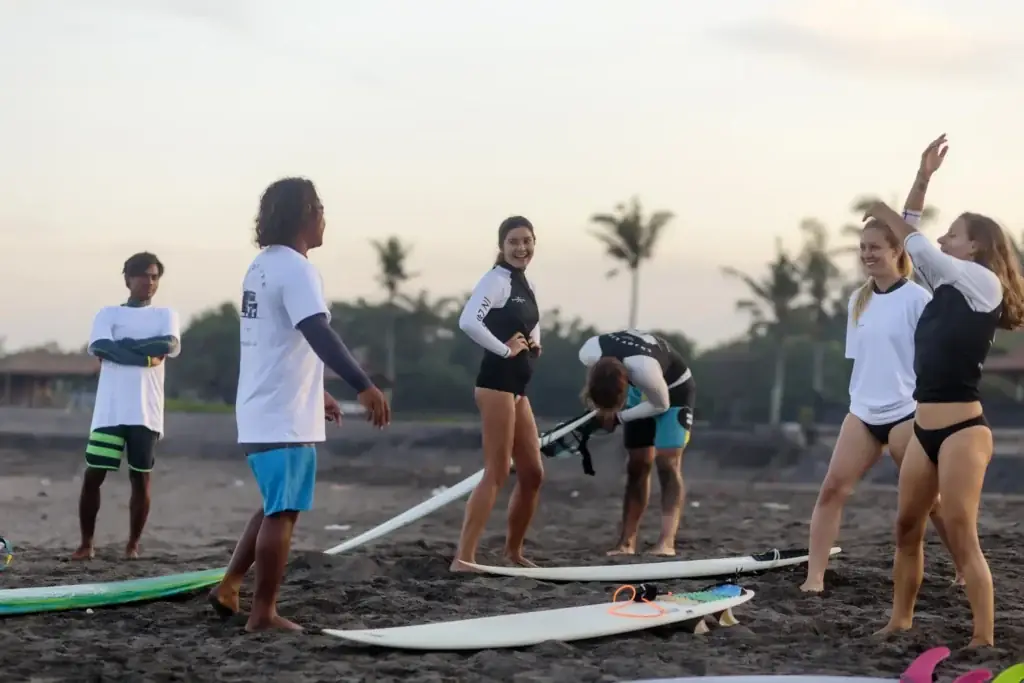
Many planners mistakenly equate proximity to popular bars with being a high-value surf destination. This preference often ignores the reality of wave consistency and lineup congestion. The most effective programs prioritize breaks with reliable, predictable energy. They understand that a high wave count is the fundamental metric of a successful trip. Focusing on the technical quality of the surf break over secondary amenities is a hallmark of sophisticated group planning.
The Risks of Operational Oversimplification
It is dangerous to treat group retreats as static events. Institutional providers must adapt to changing swell conditions daily. A camp that promises a fixed, rigid itinerary is likely to struggle when weather patterns force an unexpected location shift. Reliability is defined by the ability to pivot resources efficiently without causing organizational friction. The best providers maintain alternative sites and adaptive curricula, ensuring that the group’s core objective—improving athletic performance—is protected.
Historical Evolution of Collective Wave Instruction
Group-based ocean training transitioned from informal beach gatherings to structured business entities over the last four decades. Initially, group trips were disorganized affairs relying on personal relationships with local guides. There was little focus on pedagogy or systematic skill progression. The goal was simple: facilitate basic water access for travelers who lacked regional knowledge.
The Rise of Professionalized Hubs
Market demand for more rigorous athletic standards led to the birth of dedicated performance hubs. These organizations invested in permanent facilities and long-term land-use permits. They realized that high-quality surf instruction required consistent, predictable access to specific ocean topography. This shift forced these institutions to treat group dynamics as a logistical puzzle requiring specialized management, rather than a side effect of leisure tourism.
Modern Technical Infrastructure
Today, high-performance training sites utilize data-driven swell tracking to guide group movements. This evolution demonstrates a shift from “location-based” training to “condition-based” training. Instead of visiting a beach because it is famous, cohorts visit because the bathymetric profile matches their current technical needs. This maturity is necessary for groups that prioritize skill growth over brand reputation.
Conceptual Frameworks for Group Dynamics
Navigating the ocean in a group setting requires mental models that account for collective behavior. These frameworks transform a group of individuals into a coordinated athletic cohort.
The Resource Segmentation Framework
This model suggests that group success is tied to the efficient distribution of coaching staff. By segmenting the cohort into smaller, homogeneous skill clusters, the institution ensures that feedback is targeted.
-
Skill Assessment: Identifying the specific biomechanical flaws within the group upon arrival.
-
Resource Distribution: Placing the most experienced instructors with the most challenging skill gaps.
-
Feedback Loop: Implementing real-time communication to ensure every student feels personal progress.
The Lineup Capacity Model
This framework analyzes how the host institution manages the group’s presence in a lineup. The goal is to minimize the impact on local surfers while maximizing the cohort’s wave count. This requires proactive scheduling, such as accessing breaks during “off-peak” tidal hours, ensuring that the group acts as a discreet participant rather than a disruptive force.
The Collective Fatigue Matrix
Surfing at a high level causes rapid physical exhaustion, which degrades decision-making and safety awareness. This model mandates mandatory recovery periods within the group itinerary. By enforcing these buffers, the organization protects the group’s overall health and prevents the accumulation of physical injury.
Categorizing Integrated Surf Retreat Models
The landscape for the best surfing camps for group trips is varied, ranging from mobile instructional teams to established permanent residences. Each variation carries specific trade-offs regarding cost, focus, and flexibility.
Fixed-Facility Residential Academies
These institutions operate out of owned or leased properties located directly adjacent to primary wave zones. They offer the highest degree of comfort and the most consistent technical support. The primary drawback is a lack of mobility if local conditions shift for an extended period.
Expeditionary Instructional Teams
These mobile operators travel to different regions depending on the seasonal swell cycle. They are ideal for cohorts that prioritize exploring world-class waves above all else. This model provides massive versatility but requires a higher degree of trust in the institution’s organizational ability to navigate remote logistics.
Institutional Selection Logic
When evaluating options, prioritize the “Consistency Factor.” A group trip relies on predictable outcomes. If the institution has a track record of adapting its schedule to changing swell charts, it possesses the intellectual maturity necessary for a successful cohort retreat.
Operational Scenarios and Conflict Resolution
Managing a group retreat involves mediating tensions between individual desire and the realities of the physical environment. Proactive planning resolves these issues before they manifest as operational failures.
Scenario A: The Skill Mismatch Crisis
A group arrives, but the skill gap between the strongest and weakest surfers is wider than anticipated. The instructor cannot address everyone effectively.
-
The Decision: The provider splits the cohort into two separate training lanes. One lane focuses on fundamental pop-ups in shallow water, while the other moves to the outside for advanced line-reading.
-
The Second-Order Effect: Both subgroups feel challenged at their respective level, and morale stays high because individuals do not feel held back or overwhelmed.
Scenario B: Environmental Downtime
A major storm surge renders the primary surf break unsafe for the entire group.
-
The Decision: The institution immediately switches to a “dry-land” instructional focus. They provide video analysis, surf-skate training, and oceanography lectures to keep the group engaged.
-
The Outcome: The group maintains physical conditioning and learns deep technical knowledge, turning a potential disaster into a productive educational moment.
Financial Dynamics and Resource Allocation Metrics
Planners often overlook the distinction between direct costs and the cost of institutional stability. A successful group trip must budget for the infrastructure that supports safety and growth.
Categorizing Expense Profiles
-
Institutional Overhead: Covers land-use permits, insurance, and professional-grade rescue equipment.
-
Variable Coaching Fees: The cost associated with maintaining low guest-to-coach ratios.
-
Connectivity and Logistics: If the group requires work-life balance, high-bandwidth communication infrastructure is a mandatory expense.
Opportunity Cost Analysis
The best surfing camps for group trips may appear more expensive than generic tour operators. However, the value lies in the recovery of time. A cheap operator that wastes three hours daily due to poor transport or disorganized equipment is vastly more costly to the group in terms of lost progress.
Technical Field Assets and Communication Arrays
To maintain order within a group, institutions must utilize technical systems that bridge the gap between human intuition and objective data.
Radio-Link Coaching
Small, waterproof radio headsets allow coaches to give instructions to surfers in real-time. This is critical for groups. It prevents the need to gather the entire cohort on the beach every time a correction is needed, allowing for continuous instructional flow.
Drone-Assisted Visualization
Aerial video provides a bird’s-eye view of the entire group. It captures how surfers interact with each other and the wave peak. This data is invaluable for showing a group the difference between effective positioning and crowding.
Standardized Gear Inventories
High-performance camps provide a wide range of board sizes to accommodate varying body types and skill levels. This eliminates the need for individuals to worry about transport logistics and ensures that everyone is using equipment suitable for their current progress.
Risk Landscapes and Compounding Failure Modes
Surfing as a group presents specific dangers that are not present when surfing alone. Crowding, communication breakdown, and varying confidence levels can create an environment where safety is quickly compromised.
Taxonomy of Compounding Risks
-
Groupthink Risks: The tendency for weaker swimmers to follow stronger swimmers into dangerous water.
-
Lineup Overload: The risk that the group collectively infringes on local surf etiquette, creating social friction.
-
Physical Exhaustion: The danger of members pushing beyond their limits to “keep up” with the group.
Institutional Safeguards
-
Whistle Communication: Standardizing emergency signals that every group member must memorize.
-
Spotter Protocols: Using non-surfing support staff to maintain visual contact with the entire group from the shore.
-
Dynamic Pacing: The instructor’s ability to force rest periods even when the surfing is excellent.
Governance, Maintenance, and Long-Term Adaptation
Institutions that survive for decades do so through rigorous adherence to internal governance and a willingness to overhaul their processes when they show signs of decay.
The Layered Maintenance Checklist
-
Equipment Audit: Quarterly inspections of leashes, boards, and rescue craft.
-
Staff Training Cycles: Regular drills for instructors, including advanced CPR and rescue scenarios.
-
Feedback Loops: A post-trip debriefing process where the institution logs every logistical issue, no matter how minor.
Adaptation Triggers
If a camp’s guest feedback consistently identifies a specific bottleneck—such as transport delays or food quality—the institution must trigger an immediate operational review. Stagnation is the primary enemy of long-term success.
Tracking Performance and Evaluation Metrics
The best surfing camps for group trips treat progress as a metric to be tracked, not a feeling to be guessed. Documentation provides the group with proof of the value delivered.
Leading and Lagging Indicators
-
Leading Indicators: Attendance in dry-land drills, individual engagement with video analysis, and consistency in safety protocol drills.
-
Lagging Indicators: Improvement in wave-count percentage, technical correction retention, and overall group safety record.
Sample Documentation
Institutions should provide a “Group Technical Summary” at the end of the trip. This report benchmarks where the group started, where they finished, and the specific technical hurdles overcome. This data allows for continuous improvement in subsequent trips.
Common Misconceptions and Structural Myths
The surf industry is heavily influenced by marketing narratives that often clash with the reality of high-level athletic training. Clarifying these myths is essential for informed group planning.
Myth 1: “Unlimited Surfing” Is Better
Quantity does not imply quality. Many operators sell “unlimited” access as a benefit. In reality, a group that surfed for two hours with focused instruction will always be more exhausted and have made more progress than a group that spent five hours aimlessly riding waves.
Myth 2: Popular Breaks Are Optimal
Crowds are the enemy of technical learning. The most famous wave in the world is often the worst place for a group to learn, as the struggle for position leaves no space for instructional observation.
Myth 3: Equipment Rental Is Enough
Professional instruction requires a curated selection of boards. Relying on generic, oversized foam boards from a local shop prevents students from transitioning to the equipment they actually need to improve.
Ethical and Contextual Considerations
The presence of a large group has a measurable impact on the local environment and community. The best surfing camps for group trips operate with a deep awareness of their footprint.
Sustainable Stewardship
Responsible providers integrate with the local community. They hire local watermen, support regional conservation efforts, and operate in a way that demonstrates respect for the lineup. This creates a lasting, positive connection between the visitors and the local environment, ensuring that the group’s presence is welcomed rather than merely tolerated.
Conclusion
Planning a surf trip for a group is a logistical challenge that demands a disciplined approach. The search for the best surfing camps for group trips is, fundamentally, a search for institutional competence. By focusing on the infrastructure, the staff-to-guest ratios, and the pedagogical structure of potential providers, planners can bypass the superficial allure of tourist marketing. True value resides in the camp’s ability to turn a collection of individuals into a coordinated athletic cohort, facilitating collective progress while maintaining safety and environmental respect. A successful group trip leaves the members improved in their capacity and mindful of their impact on the coastal world.