Guide to Family Surf Camps: Operational Selection & Safety Frameworks
Best surfing camps for families. The evolution of coastal tourism has driven a significant shift in multi-generational travel planning. Historically, surf travel was viewed as a rugged, individual pursuit suited mostly for single adventurers. Modern hospitality models have reconstructed this paradigm by introducing dedicated family surf programs. These specialized operations consolidate athletic instruction, childcare, safety protocols, and group logistics into unified systems. Consequently, choosing an appropriate destination requires a careful examination of variables that extend well beyond standard beach resort amenities.
Family surf travel introduces complex operational challenges that do not exist in standard adult itineraries. When multiple age groups travel together, individual physical capabilities, risk tolerances, and recovery needs vary drastically. A successful surf excursion must balance the educational needs of young children with the physical requirements of adults. Furthermore, the local ocean environment must be analyzed to ensure safety for every family member. A mismatch between a group’s collective skill level and an operator’s specialized focus can cause poor skill progression or injury.
To maximize the value of these specialized trips, parents need a logical framework for objective evaluation. This guide provides an analytical breakdown of family-centric surf operations worldwide. By examining instructional pedagogy, bathymetry, risk landscapes, and cost structures, this reference helps convert subjective vacation planning into an objective decision-making process. The goal is to provide a complete roadmap for families seeking sustainable athletic growth and shared coastal experiences.
Understanding “best surfing camps for families”
The phrase “best surfing camps for families” is frequently oversimplified in popular marketing media. Travel brochures often define family optimization through superficial metrics, including the presence of a swimming pool or a children’s menu. While these amenities provide basic comfort, they do not address the technical infrastructure required for safe, multi-generational athletic development. A truly optimized family operation must integrate professional coaching systems with robust safety protocols and tailored childcare logistics.
Pediatric Safety Systems
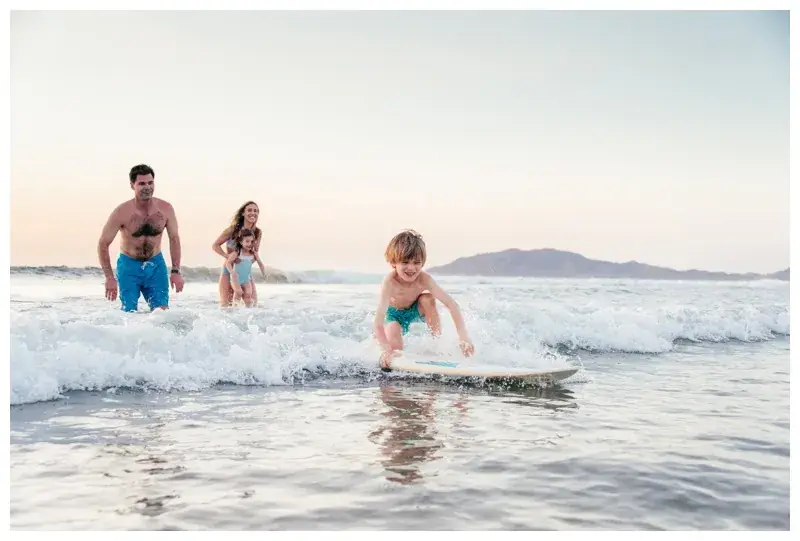
A primary misunderstanding is that standard surf instruction can be seamlessly applied to children. Pediatric surf coaching requires specific safety alterations, including lower student-to-instructor ratios and specialized soft-topped equipment. Young learners possess different centers of gravity, lower thermal regulation capacities, and unique psychological responses to ocean environments. Therefore, an optimized camp must provide instructors who are explicitly trained in pediatric water safety and youth sports psychology.
Stratified Instructional Design
An effective camp must implement a stratified instructional design to serve multiple generations simultaneously. Adults and children process motor skills through distinct cognitive pathways. While adults benefit from theoretical explanations of mechanics and video analysis, children learn primarily through imitation and structured water play. High-performance operations split families into age-appropriate coaching tracks during water sessions, reunited them during communal afternoon periods. This separation ensures that neither parent nor child faces frustration due to a mismatched pace of instruction.
Multi-Generational Logistics
Logistical reliability forms the final pillar of a successful family experience. Managing a group means that transport systems, meal schedules, and gear management must operate with high precision. If an operator relies on inadequate vehicles or lacks flexible spot selection, children can quickly become fatigued or dehydrated. Furthermore, the camp’s physical layout should offer private spaces for family rest alongside communal areas that encourage organic social interaction with other traveling groups.
Deep Contextual Background
The institutional framework of modern surf camps developed during the late twentieth century. Early surf exploration was defined by single individuals navigating remote coastlines with minimal external support. These travelers accepted high levels of isolation and physical risk as part of the sport’s lifestyle. During the 1980s and 1990s, the commercialization of surf guiding led to the establishment of fixed surf lodges in regions like South West France, Costa Rica, and the Hawaiian Islands.
These early commercial outposts catered almost exclusively to young, single, male demographics. Accommodations were typically configured as high-density dormitories, prioritizing low costs and active social scenes over privacy or comfort. The infrastructure lacked the safety protocols, nutritional variability, and private spaces required to host families or young children safely.
The Demographic Shift in Surf Culture
A significant demographic shift occurred as the pioneering surfing generations of the 1990s began transition into parenthood. These individuals wished to continue their athletic pursuits while introducing their children to the ocean environment. Concurrently, the rise of the wellness travel economy increased demand for active, health-oriented family vacations. This economic shift incentivized operators to redesign their business models, moving away from rustic surf hostels toward multi-generational surf lodges.
Today, family surf tourism represents a highly specialized sector within the global hospitality market. Operators must compete on the sophistication of their childcare systems, risk management protocols, and pedagogical methods. The integration of modern swell forecasting technologies and advanced coaching tools has created an environment where families expect structured, reliable athletic progression.
Conceptual Frameworks and Mental Models
To systematically evaluate global destinations, families can utilize specific conceptual frameworks. These mental models allow parents to break down geographic, physical, and operational variables into clear, measurable criteria.
The Kinetic-Swell Congruence Model
This framework evaluates the alignment between an ocean break’s physical forces and a child’s physical development. Wave energy is dictated by bathymetry, swell period, and local wind conditions, which combine to produce distinct breaking profiles.
-
Stage 1 (Passive Whitewater): Requires low-energy, broken waves moving over a shallow, uniform sandbar. Ideal for children under ten to build balance and basic water confidence.
-
Stage 2 (Predictable Peel): Demands slow-breaking green waves on a sand or soft point break. Suited for teenagers and parents learning to execute basic directional turns.
-
Stage 3 (Dynamic Energy): Involves high-velocity waves breaking over deeper reefs or sandbanks, requiring rapid pop-ups and precise speed management.
The limitation of this model is that changing tides can alter a single surf spot across all three stages within a six-hour cycle. Consequently, a camp must possess alternative spot access to maintain safety throughout the day.
The Operational Redundancy Framework
This mental model measures a camp’s ability to maintain high service quality when environmental or health disruptions occur. Family travel is uniquely vulnerable to unexpected events, including pediatric illness, ocean contamination, or poor weather conditions.
An optimal camp must have pre-arranged alternatives for every level. If an operation relies entirely on a single beach break with no backup activities, a spell of poor weather can leave families stranded with few options.
The Generational Marginal Utility Model
This metric evaluates the balance of satisfaction achieved by different age groups within a single itinerary. It measures whether the camp provides equal value to advanced adult surfers, absolute beginner children, and non-surfing family members. High-utility operations offer independent schedules, ensuring each family member achieves their individual vacation goals without feeling held back by the group. The primary challenge of this model is its high operational cost, as running parallel schedules requires larger guiding staffs and extensive transport fleets.
Key Categories and Operational Variations
Family surf operations are structured around distinct business models, regional topographies, and target demographics. Understanding these categories allows families to align their expectations with practical on-site realities.
All-Inclusive Eco-Surf Resorts
These premium operations prioritize comprehensive logistics, high-end comfort, and environmental sustainability. Commonly located in Central America or the South Pacific, they offer private family villas, organic dining, and dedicated childcare facilities.
-
Trade-off: These resorts require a substantial financial investment and are often located in remote areas, resulting in long travel times from major international airports.
European Summer Surf Villages
Situated along the Atlantic coast in regions like South West France or Portugal, these camps utilize a campus-style village layout. They often feature canvas glamping tents or wood cabins, providing a structured, community-oriented environment for families.
-
Trade-off: Operating seasons are strictly limited to the summer months, during which popular beaches can become highly crowded, increasing lineup competition.
Boutique Progression Academies
These specialized camps place their primary focus on rapid athletic advancement through data-driven coaching. They use toolkits like daily video analysis, surf-skate training platforms, and private pool sessions to refine body mechanics.
-
Trade-off: The intensive schedule can cause physical exhaustion for younger children or family members who prefer a more relaxed vacation pace.
Family Camp Category Comparison Matrix
Realistic Decision Logic
When deciding among these categories, parents must evaluate their family’s primary motivation. If the trip’s main goal is introducing young children to ocean environments in a comfortable setting, an all-inclusive eco-resort is often the safest choice. If the family consists of active teenagers who want to surf independently and socialize, a European surf village provides a better environment.
The most common mistake is selecting an intensive progression academy for a group that primarily wants a casual, relaxing beach vacation. This mismatch can lead to physical fatigue and frustration.
Detailed Real-World Scenarios
Analyzing real-world scenarios helps highlight the practical challenges families face during surf excursions.
Scenario A: Shifting Atlantic Sandbanks with Teenagers
A family of four, including two teenagers, travels to a surf camp in Portugal during July to improve their intermediate skills.
-
Logistical Variables: High tidal ranges (up to 4 meters), strong afternoon winds, and changing sandbar shapes.
-
Decision Point: The family must decide whether to join early-morning group sessions when the tide is optimal, or opt for afternoon sessions that better match their teenagers’ sleep schedules.
-
Failure Mode: Choosing the afternoon sessions for convenience, resulting in choppy waves, strong winds, and difficult paddling conditions.
-
Second-Order Effects: The teenagers become frustrated by the challenging ocean conditions, lose interest in the sport, and experience physical exhaustion that impacts subsequent days.
Scenario B: Tropical Eco-Resort with Young Children
A couple travels to a remote island camp in Indonesia with their six-year-old and eight-year-old children during April.
-
-
Logistical Variables: High heat index, strong tropical sun, and deep reef shelves at low tide.
-
Decision Point: Parents must choose between surfing an offshore reef break together while leaving their children with resort sitters, or staying at a shallow inside break as a family.
-
Failure Mode: Leaving the children with unvetted childcare staff while surfing distant breaks, causing parental anxiety that limits their focus in the water.
-
Second-Order Effects: The children experience sunburn and dehydration due to improper sun protection on the beach, disrupting the family’s schedule for the rest of the week.
-
The financial commitment required for a family surf camp involves multiple hidden variables that extend beyond the base package price. Parents must analyze direct, indirect, and opportunity costs to build an accurate budget.
Direct vs. Indirect Cost Structures
Direct costs typically include family lodging, scheduled group lessons, equipment rentals, and airport transport. Indirect costs encompass items like tips for local staff, specialized sun protection gear, medical insurance upgrades, and optional video analysis packages.
Furthermore, equipment damage fees can accumulate quickly if a child inadvertently damages a fiberglass board on a rocky shore. Food and beverage costs should also be checked to see if the package is fully all-inclusive or operates on a room-only basis.
Resource Allocation and Hidden Fees
For families, transportation flexibility represents a major operational variable. If a camp does not include dedicated group transport in its base price, parents must rent a large vehicle or pay for multiple local taxis.
Renting a vehicle adds fixed costs like fuel and insurance, which can significantly alter the overall trip budget. The table below outlines standard financial ranges across major global regions for a family of four over a one-week stay.
Estimated One-Week Family Cost Framework (USD)
Tools, Strategies, and Support Systems
A family group must utilize reliable tools and proactive planning strategies to ensure safety and consistent athletic progress when visiting a surf camp.
Swell Forecasting Software
Before allowing children into the ocean, parents should independently check local wave conditions using platforms like Surfline. Relying solely on camp guides can occasionally expose younger family members to waves that exceed their capabilities. Understanding metrics like significant swell height, wave period, and tide stages allows parents to anticipate how a break will behave during a lesson.
Pre-Arrival Physical Conditioning
Surfing requires significant upper-body paddling power, cardiovascular endurance, and core stability. Arriving at a camp without physical preparation can cause muscle fatigue by day three, reducing the value of the remaining lessons.
Prioritizing swimming, balance training, and flexibility work for six weeks before departure helps prevent fatigue-related injuries. This conditioning ensures the family can handle twice-daily surf sessions comfortably.
Verification of Professional Credentials
It is vital to verify that a camp’s coaching staff holds legitimate certifications from recognized organizations, such as the International Surfing Association (ISA). Certified coaches undergo formal training in ocean rescue, pediatric first aid, and structured instructional design. Choosing operations that use uncertified local guides increases safety risks, particularly when managing young children in changing ocean conditions.
Risk Landscape and Failure Modes
The intersection of youth sports, remote travel, and ocean environments creates a distinct risk profile. Families must understand how minor oversights can compound into serious emergencies.
Physical and Environmental Risks
The ocean presents inherent hazards like strong rip currents, shallow sandbars, stinging marine life, and powerful shorebreaks. Without focused supervision, a young child can easily lose their balance in shallow whitewater and get carried into deeper zones. If an instructor is distracted or the student-to-coach ratio is too high, rescue response times can increase dangerously.
Health and Logistical Failures
Traveling with children means that foodborne illnesses, heat stroke, or minor injuries can quickly disrupt an entire itinerary. If a camp is located far from modern medical facilities, a simple infected coral scratch can become a serious health issue. Logistically, lost baggage or damaged surf gear can also cause significant delays if the camp does not maintain an extensive on-site backup inventory.
Preventive Mitigation Strategies
To minimize these compounding risks, families should establish a strict safety protocol. This protocol includes carrying a comprehensive medical kit designed for marine injuries, purchasing travel insurance that explicitly covers surfing, and maintaining clear communication with local staff regarding each family member’s physical limits.
Governance, Maintenance, and Long-Term Adaptation
Evaluating family surf camps requires ongoing research, as operational quality, local environmental factors, and management teams can change rapidly over time.
Operational Review Protocols
A surf camp that offered exceptional family programming two years ago can experience a drop in quality if key pediatric coaches leave or if property management changes hands. Parents should read recent, independent guest reviews rather than relying on outdated travel articles. Pay close attention to feedback regarding equipment maintenance, transport safety, and the attentiveness of the childcare staff.
Dynamic Coastal Environments
Coastal ecosystems are highly dynamic. Seasonal storms, shifting river mouths, and local coastal development can alter how sandbars form and waves break.
A beach break that was once ideal for children can become a heavy shorebreak if a winter storm shifts the underwater topography. Verifying current coastal conditions with local surf organizations before booking helps ensure the destination remains safe for young learners.
Structured Pre-Booking Checklist
To ensure a camp aligns with safety and personal requirements, parents can use a multi-tiered evaluation checklist before finalizing a booking.
-
Safety Infrastructure: Confirm the camp keeps a dedicated safety vehicle on hand, maintains updated first-aid equipment, and uses ISA-certified instructors with clean safety records.
-
Logistical Inclusions: Verify that daily family transport, equipment rentals, soft-top board availability, and airport transfers are clearly outlined in the contract.
-
Living Space Layout: Check the room configurations to ensure adequate privacy, kid-friendly safety features, and quiet areas for restorative rest.
-
Childcare Redundancies: Confirm that on-site childcare providers are fully background-checked, first-aid certified, and trained to manage young children in tropical climates.
Measurement, Tracking, and Evaluation
Evaluating the success of a family surf camp involves tracking both quantitative athletic improvement and qualitative indicators of family well-being.
Quantitative Progression Tracking
Parents can track their family’s physical development by observing specific, measurable milestones over the course of a stay:
-
Take-off Success Rate: The percentage of paddled waves successfully caught and stood up on, which tracks improved balance and timing.
-
Ocean Staying Power: The total minutes a child can actively paddle and participate in a session without experiencing extreme physical fatigue.
-
Green Wave Transitions: The number of times a surfer successfully rides the open face of a wave rather than riding straight in the whitewater.
Qualitative Success Signals
Beyond metrics, qualitative outcomes indicate whether a camp has truly met a family’s long-term goals. These include a measurable increase in a child’s ocean confidence, a deeper understanding of marine conservation, and new shared family memories. If a family leaves a camp feeling physically tired but confident in their ability to navigate a new beach safely together, the investment has delivered excellent value.
Common Misconceptions and Oversimplifications
Several persistent myths surround family surf camps, frequently leading parents to make poor booking decisions.
-
Myth: Any family-friendly resort can teach children to surf safely. Luxury resorts often outsource their surf programs to unvetted local guides who may lack training in pediatric water instruction. True family surf camps place specialized instruction at the core of their business model rather than offering it as a casual add-on.
-
Myth: Children should learn on the same waves as adults. Teaching young children on powerful, open-ocean waves is a common mistake that can lead to fear and injury. Young beginners require gentle, shallow whitewater zones where they can stand comfortably and build basic confidence safely.
-
Myth: Advanced surf destinations are unsuitable for families. Many world-class surf regions feature diverse topographies, offering heavy reef breaks for advanced surfers alongside calm, protected lagoons for beginners. Finding these versatile locations simply requires deep geographical and operational research.
Ethical, Practical, and Contextual Considerations
The expansion of global surf tourism carries significant social and environmental responsibilities that traveling families should keep in mind. Surf camps often operate in developing coastal regions where local communities face economic challenges and limited resources.
Local Economic Contribution
Parents should choose operators that employ local surf instructors, drivers, kitchen staff, and managers, paying them fair wages. Some foreign-owned businesses send most of their profits abroad, leaving minimal economic benefits for the host community. Supporting camps that invest in local talent helps foster sustainable tourism models.
Environmental Stewardship and Lineup Etiquette
Large groups of travelers can place a strain on local infrastructure, leading to issues with waste disposal, water scarcity, and reef degradation. Responsible camps implement eco-friendly practices, including solar power systems, water filtration to reduce plastic use, and proper waste treatment.
Furthermore, families should learn and respect local lineup etiquette. Crowding a surf spot or ignoring right-of-way rules creates unnecessary tension with local surfers and compromises safety for everyone in the water.
Conclusion
Selecting among the best surfing camps for families requires balancing geographic preferences, technical coaching needs, safety protocols, and multi-generational logistics. For a group traveling together, a professional surf camp acts as more than just a place to stay. It provides a functional, secure system that manages ocean risks and delivers an enriching shared experience. By looking past surface-level marketing and using objective evaluation criteria, parents can identify operations that offer genuine athletic progress and safe, lasting family memories.
Ultimately, the success of a surf vacation depends on matching your family’s collective needs with a camp’s specific operational environment. Whether choosing a structured summer village in Europe or a premium eco-resort in the tropics, success comes down to careful planning and a clear focus on safety. Approaching this decision with analytical focus ensures your time, energy, and financial investments yield long-term rewards for your family’s ocean journey.